Sunday, July 17, 2022

Flat Jane Austen in Providence Rhode Island

 Flat Jane Austen in Providence, Rhode Island:
In which Jane pays calls on the elite


June, 18-
My dear friends,

It is nearly time to leave this unusual place and move on to visit other friends. First, though, I pay calls on the neighbors. 

Many of the elite residents of Providence earned their wealth in the China trade. Next door to Mr. John Brown's family lives another Brown, Mr. John Nicholas Brown, Jr, (nephew of Mr. John Brown) and his family. 

Now the John Nicholas Brown Center for Public Humanities and Cultural Heritage
at Brown University

The house was built in '91 for Colonel Joseph Nightingale and sits on one acre of land. Mr. Nightingale was a Revolutionary and merchant of the firm Clark & Nightingale. They sold goods from the East Indies, stationary and hardware at their shop at the Sign of the Frying-Pan and Fish. They also made rum which was traded for human flesh.

Side of the house, possibly later addition

back wing, probably later addition


This Mr. Brown is an industrial leader, state representative, co-founder of the Providence Athenaeum and generous donor to Rhode Island College. As such, the college was renamed for him. 

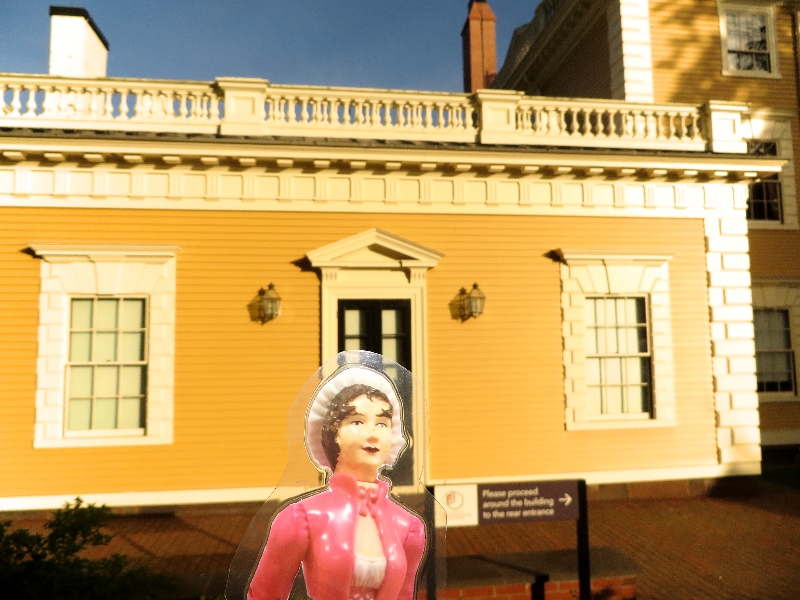
Around the corner is the home of Mr. Edward Carrington, a China Trade merchant and associate of the Brown family. It is of recent construction, only begun in '10 for a Mr. John Corliss, Mr. Joseph Nightingale’s brother-in-law. Construction was interrupted by a series of legal conflicts with Spain. Mr. Corlis ran out of money before the house was completed. He removed to Kentucky to try his hand in tobacco.  

Corlis-Carrington House, a home away from home for community leaders
Be sure to look inside and take a tour to see period inspired furnishings


Mr. Edward Carrington recently returned from duties as American consul in Canton, China. He has married a shipping merchant's daughter, the former Loriana Hoppin. Mr. Carrington's office is located to the side of the house. How... American.


This house at 2 George Street, was built for Mrs. Eliza Ward, daughter of Mr. Joseph Brown, the architect. 'Tis newly built a few years previous in 1814. Mrs. Ward is a widow and lived with her brother until her home was completed. A widow living alone? It is not a truth universally acknowledged that women can not take care of themselves?! It seems as if American ladies are more independent than we are.
Eliza Ward House


The interior is most elegant with ceiling cornices, and elaborate, delicate wood trim. Mrs. Ward enjoys hanging French wallpaper. A particular favorite is Les Rives de Bosphore (Banks of the Bosphorus) printed by Joseph Dufour. It is rather... loud, much like the French.

Susanna's family home is located near Planet Street, named for the Transit of Venus and the previously mentioned Congregational Church. 
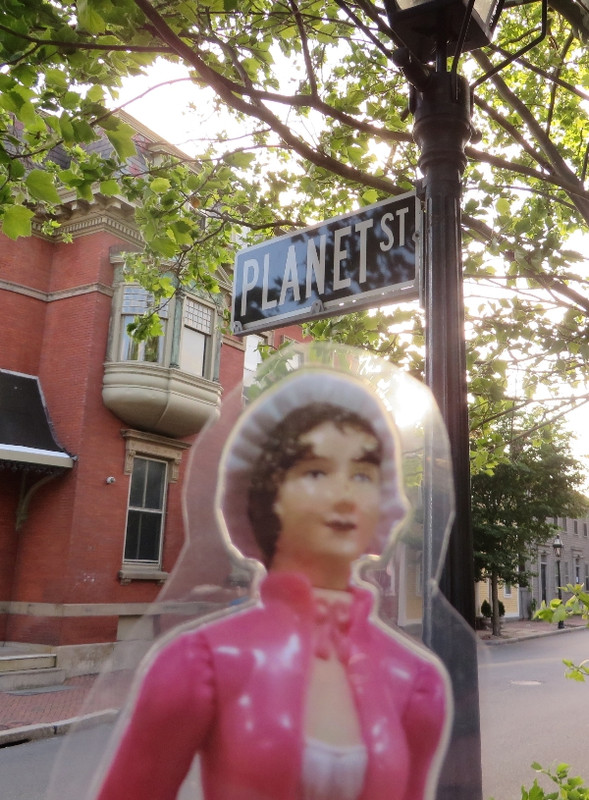


Flat Jane at the RI School of Design's Pendelton House


 Charles Pendelton House, a reproduction Federal Era home built for the purpose of displaying the collections of Charles L. Pendleton (1846-1904), given to the RISD Museum in 1904.


editor's note: This building is in actuality at the opposite end of Benefit Street but in keeping with the Federal style, I have placed it with the other grand homes built in Jane's day.


Her family is well connected and her father works for one of the China trade firms.

Reproduction Federal era home


I shall paint a picture with my words to shew you how the inside looks.

Please turn the page

Flat Jane Austen In Providence, Rhode Island

 Flat Jane Austen Visits Providence, Rhode Island:
In which she pays calls on the elite

Editor's Note: All photos taken inside the Rhode Island School of Design Museum's Pendelton House. 

Not all these objects belonged to one family or were displayed at the same time. This is a museum display intended to display the objects in a more natural setting. The museum was free which is why Jane is showing you these rooms and not an actual house museum! 

"The evenings can be a bit chilly so I warmed myself by the fire.

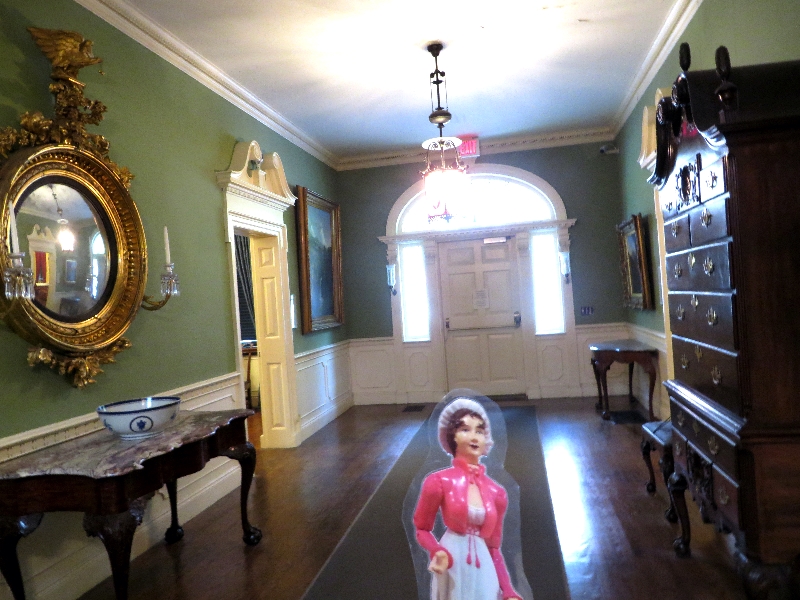
Moving along the hallway, I see a gilded mirror in a very American stile. Can you spy the eagle on top? I am told the Bald Eagle is the national bird and prominently featured on Chinaware and other decorative items. However, this mirror is actually French, in the stile of Napoleon! These Americans greatly admire the French.

Girandole (looking glass)  c. 1805 with acanthus and eagle design from the French empire period

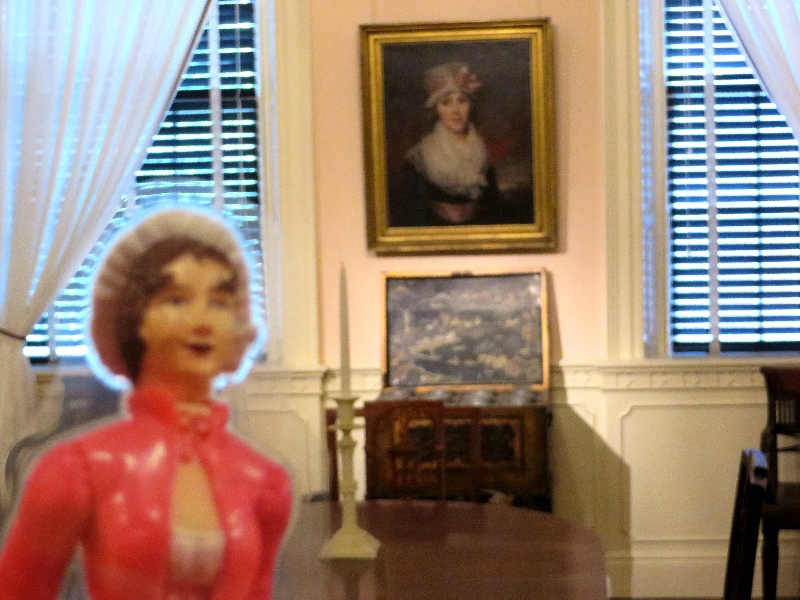
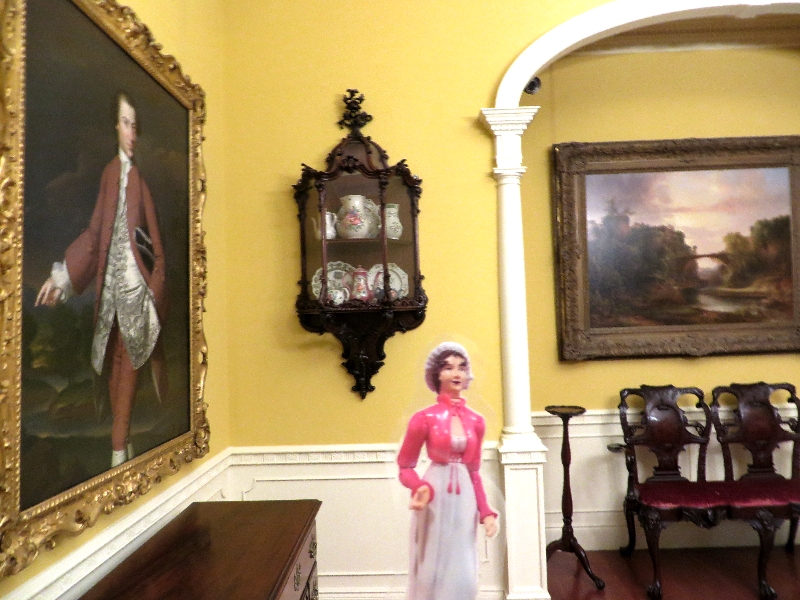
We sit down to dine in this room. Were you aware that prior to  the 90s the Americans did not have separate rooms for dining? These new elegant homes all have dining rooms yet they are not quite as grand or formal as Edward's. Even their portraits are of a recent vintage and less formal than the ones we see in grand dining rooms in England.

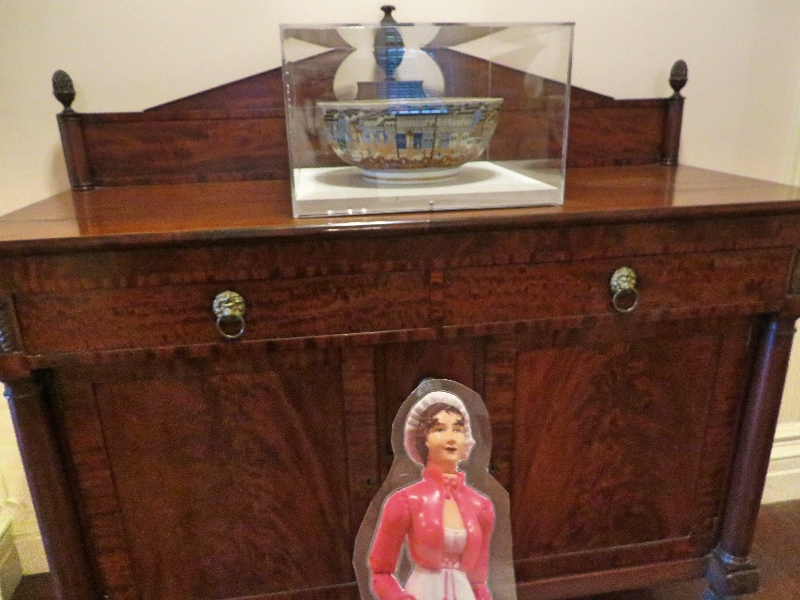
Sideboards, knife boxes and cellarets (chests to hold wine bottles) are all new since the 80s. 


Flat Jane in a reproduction Federal Era dining room.

This room is furnished in the Neoclassical stile. The furniture is rather delicate rather than the ornate Rococo pieces favored in colonial times. I see Hepplewhite furniture in this room including the dining table to your left. 

Mrs. Allin displays many pieces of Chinese export porcelain in her dining room.

Mahogany and pine sideboard and punch bowl with Cantonese Hongs ca. 1785-1800

The portraits seem rather different from our own. 


This table is rather modern for an American home. 


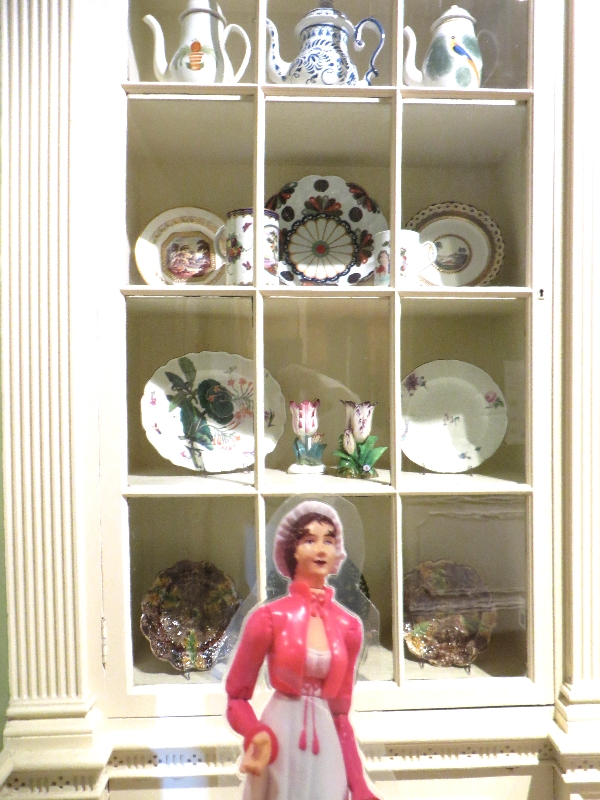
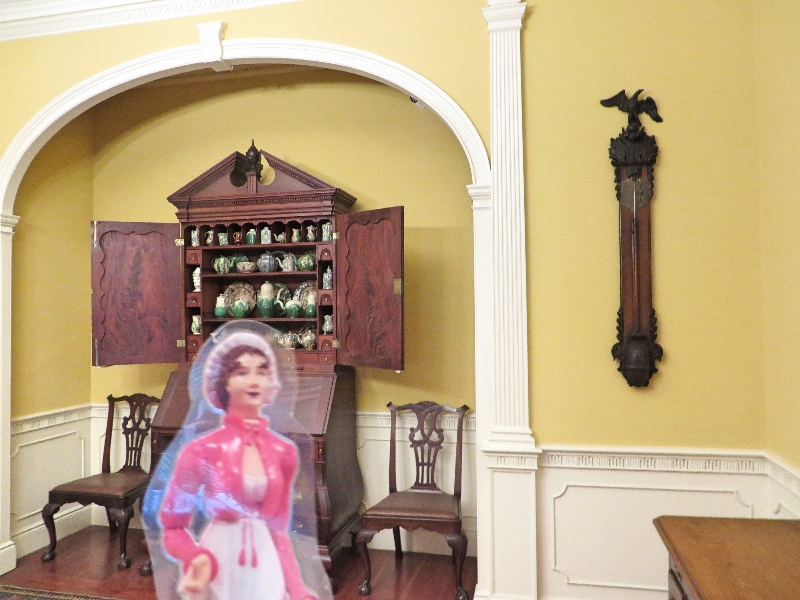
Susanna's family has excellent taste. Here, her mother has displayed some good English porcelain from Liverpool, Chelsea, Worcester and Derby. 
The Liverpool Creamware Jug on the top shelf features an image of a ship. The ship's name can be customized, like The Ann & Hope, a ship once owned by Mr. Nightingale's firm. I believe my mother would like to have one with Frank's ship and one with Charles's ship but which to choose?


Mrs. Allin also has a collection of Chinese export porcelain. 

coffee service with seal of United States


Chinese export porcelain 1800s


please turn the page 

Flat Jane Austen in Providence, Rhode Island

 Flat Jane Austen in Providence, Rhode Island: 
In which Jane pays calls on the elite

Editor's note: Apologies for any offensive images and scenes from 18th and 19th-centry life. I am attempting to try to accurately depict what Jane Austen might have seen if she had been a famous author travelling in America. All items on display at the Rhode Island School of Design Museum Charles Pendelton House. 

I have been given leave to sketch some American homes for you. American homes are much more primitive than our noblemen's' seats or gentry class country homes yet larger than our London townhouses. The main difference as far as I can tell is Americans enjoy conspicuous displays of wealth. 

They place their prized objects on display and proudly share what price they may have paid for it, as if bargain hunting were a competitive sport. They lack the inherited possessions and land of our gentry. 

Perhaps one day they will pass their teapots and such on to their children. Will the popular designs of today one day be out of fashion and the tea sets and things thrown away? Or will they one day end up in a museum?

Inside, the Allins, the Doors, the Browns and others display their China prominently. There is porcelain from Germany and China, earthenware and transferware from England and Mexico; Chinese export coffee sets, chocolate sets. 

These Americans seem to collect multiple tea sets. I am uncertain whether all of these serve a function or are purely decorative. Imagine having THAT great wealth to only display a tea service? That is America for you. They seem to do everything in spades here. 

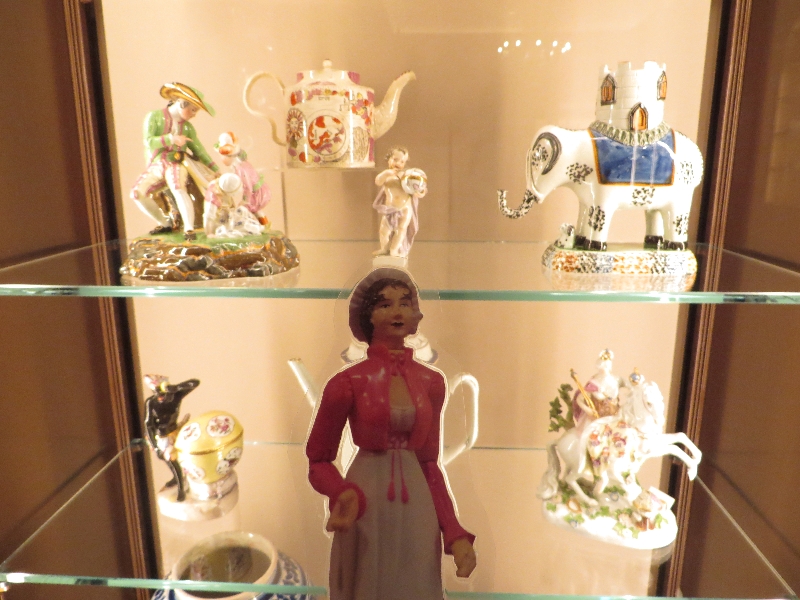
Johann Peter Melchior, modeler Map Seller and Two Children, ca. 1775; Creamware Teapot, 1770-1782  Earthenware with transfer print and glaze; Figure of man holding a globe; Pratt Ware Money Box in the collections of the Rhode Island School of Design Museum


What charming figurines from Germany, a lovely creamware teapot from England and a good old English Prattware money box. The teapot has quite a unique design. It depicts the goddess Juno on the reverse. 

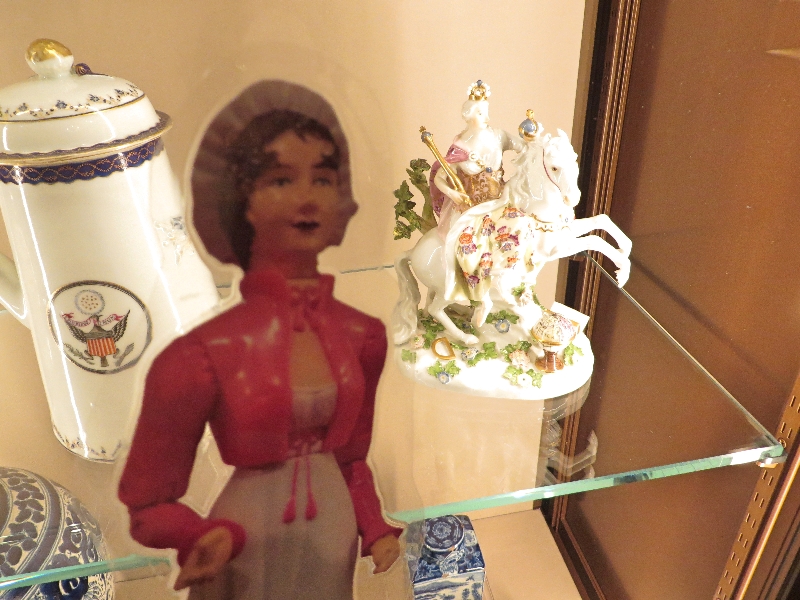
Coffee pot, Chinese 1800; Europa on a Horse, 1745-1747, 


The coffee pot is very American yet made in China in the year 1800! I hear the Chinese are making objects for export now.

This German figurine of a lady on a horse depicts the story of Europa, consort of Zeus.

from the collections of the Rhode Island School of Design Museum


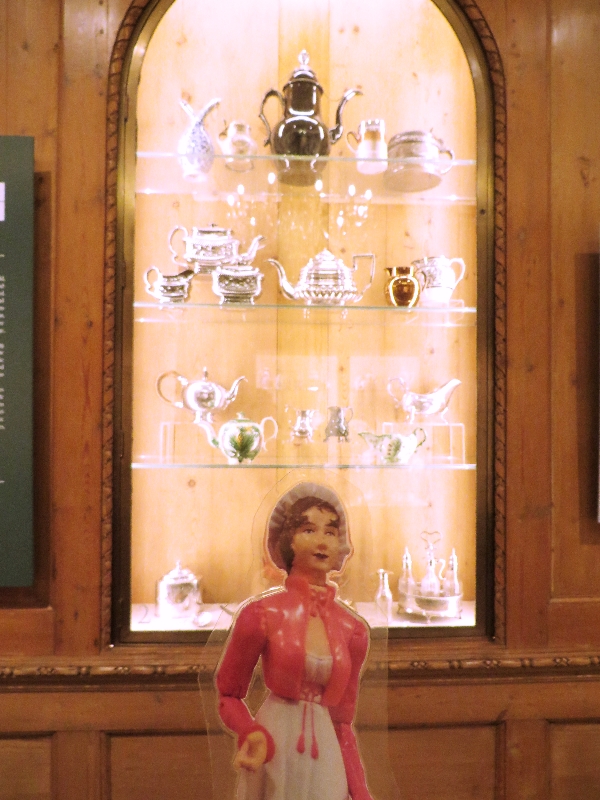
Many many teapots of all shapes, sizes and designs! The silver object on the top shelf above is a Dutch double necked vessel from the 1600s. Next to it is a stoneware and gilded silver mug from 1520-1550! For some reason, the family still displays an English coffeepot of earthenware made in the 1760s. This family also displays an English mug (1708) and German tankard (1650-1700) on the top shelf. The rest of the objects in the middle are good English pieces from different tea sets made in the middle of the last century. Finally, the bottom shelf showcases 18th-century English, Dutch and German silverware.

Now we get to the fine Chinese export porcelain. 

Batavia ware vase and bowl with cover c. 1740, Chinese;
pot, silver and ivory, Indian, 1800s; Batavia ware teacup and saucer, ca. 1720 and Batavia ware bowl
ca. 1740; Chinese for export in the collections of the Rhode Island School of Design Museum

Porcelain coffee set from Meissen Porcelain Manufactory
 ca. 1760, Collections of the Rhode Island School of Design
Museum 36.611


This bird design is quite nice. Susanna rather likes the little robins. 

I saw such an unusual teapot shaped in the form of a pineapple. Though it is English, I do not recall ever seeing such a thing.

Teapot in the shape of a pineapple, 1750-1770; This teapot's form underscores England's interest in and commercial connections to Eastern cultures. The pineapple was a costly import to Europe, and in social settings signified gracious hospitality and worldly knowledge.
To the right, a figurine by J
ohann Joachim Kändler, modeler
The Cherry Pickers, 1753 - 1765

An unusual and eclectic display of objects, both European and American.
Josiah Wedgewood & Sons, pudding or jelly mold, early 1800s, earthenware with glaze,

object number 22.217;  creamware custard cup with cover ca. 1780, earthenware with glaze, object number 24.512; Johann Wilhelm Lanz, German, Man Breaking Eggs, ca. 1757-1759, object number 55.181.1; Meissen, Adam Friedrich von Löwenfinck, 1714 - 1754, German, designer, Ice Cream Pail, 1727-1736, object 2020.09

In the middle we have marine ivory pie crimpers or jagging wheels. These objects reflect New England's maritime culture. Next to that is displayed a rather terrifying ice cream pail and a sweet little custard cup.

cup with cover Chinese for export ca. 1800 2014.4; Jasperware custard cup with cover, ca. 1800, 2002.59.9


I find implements for serving a fine dinner proudly on display. 

Is that a GOOSE tureen? I see they also have a more traditional Wedgewood tureen.

Chinese export Goose Tureen and Cover, ca. 1760-1780, object number 2017.74.30ab; Josiah Wedgewood & Sons tureen with cover and stand, 1805-1815 (center object), object number 40.187; 


In this case, the Americans display implements for preparing and drinking beverages of alcohol. Rum made in Rhode Island is a major export, traded for African slaves who are sent to the West Indies to harvest the sugar cane to make molasses.

Flagon with arms of Rhode Island, Chinese for export, ca. 1800, object number 2016.
102.20.1; Flint glass bottle , late 1700s, early 1800s, American, object number 25.070.14; Tumbler with carrying case and stamp, English, ca. 1800-1810, lead glass, rattan case and ivory, object number 1993.038


These tea seats are quite unusual.

Tortoiseshell ware teapot, and cream pitcher, English, ca. 1750-1765, object 04.337 
and 04.202; Teapot, Chinese intended for the Thai market, 1800s, object number 2004.12.15; Samovar, Persian, brass and wood, 1800s, object 67.397ac; South American drinking straw with filter (bombilla) 1800s, objects 40.017.326, 1989.045.12.502, 1989 045.12.30; mate cup with bombilla, 1800s, South American, silver, object 13.1504; far left on second shelf is Mochaware teapot, English, late 1700s/early 1800s, object 29.187; next shelf: [1800s and 1600s Japanese tea paraphernalia and water jar. Jane wouldn't know about Japan.]; Fourth shelf: Tortoiseshell ware teapot, and saucer, English, ca. 1750-1765, object 64.227; Agate ware teapot, English,  ca. 1745; Meissen teapot, German,1735-1737, object 17.090.02


Is that... a teapot? In the shape of a squirrel?! Squirrels represent industriousness and hard work. Mr. John Brown was quite fond of them and even had wallpaper made up depicting squirrels. 

Please turn the page
Flat Jane Austen in Providence, Rhode Island

  Flat Jane Austen Visits Providence, Rhode Island:
In which she pays calls on the elite


Editor's Note: All photos taken inside the Rhode Island School of Design Museum's Pendelton House.

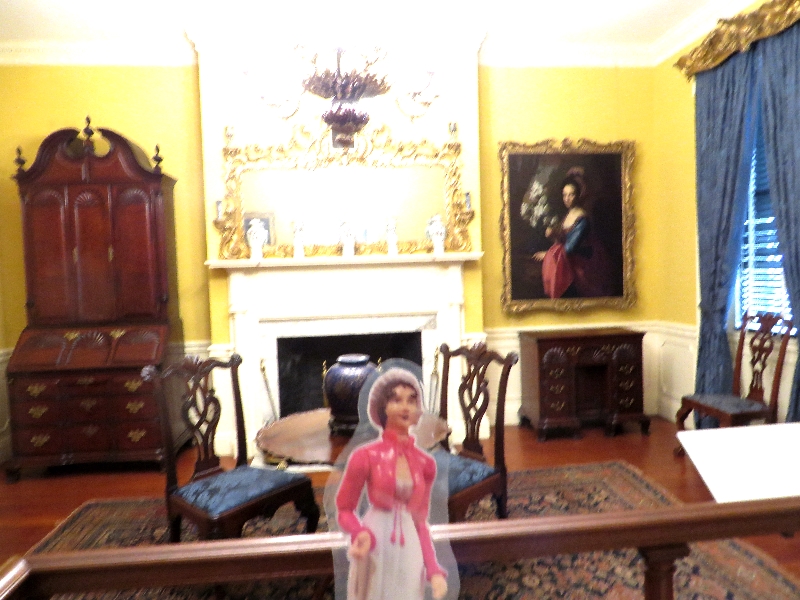
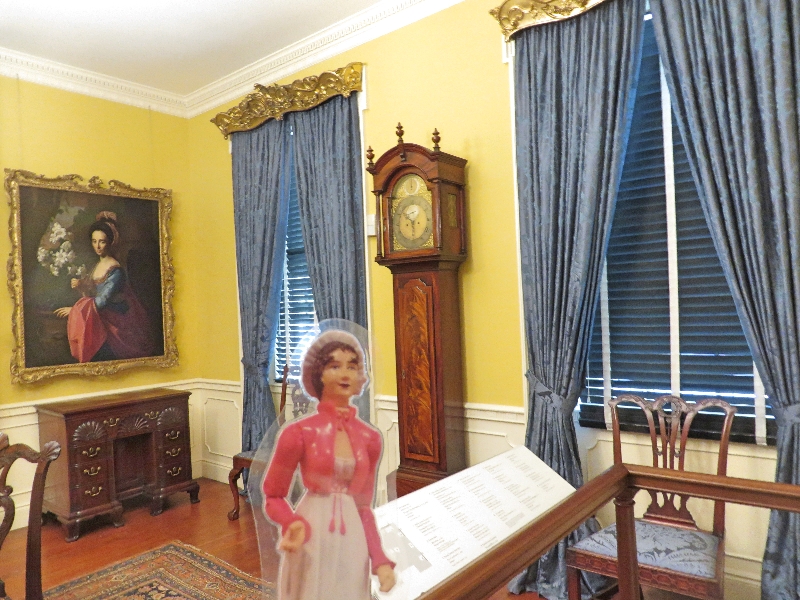
Not all these objects belonged to one family or were displayed at the same time. This room is set up to resemble the donor's library c. 1900. The Rococo furniture is period but window cornices, chandelier, overmantel mirror and settee date to 1900.


"Mr. Allin's library is furnished in the older Rococo style. The solid color walls and Oriental carpet mark this room as older in style, from the last century. 

 I see much furniture but no books! Most of the furniture is American made from the last century. The desk and bookcase was made in Newport, a city in the southern end of the state on the ocean. Mr. John Goddard built the case from mahogany, cedar, yellow poplar and pine. 

The bureau table and tall clock come from Newport as well. Some of the other furniture comes from Philadelphia. Newport and Philadelphia seem to have been centers of Chippendale style furniture making.

ignore the 1850s valances and look at the portrait of Sarah Prince Gill 
1764 by John Singleton Copley

Somehow Mr. Allin has managed to acquire some American portraits as well. Some are by John Singleton Copley. I have heard of him! He lived in London, near Henry and died but a year or so ago.

John Singleton Copley, Governor Moses Gill, 1764

This room also features some Chinese export porcelain! 
The barometer comes from Holland. What a peculiar mix of styles!

Please turn the page...

Friday, June 17, 2022

Flat Jane Austen in Rhode Island

 Flat Jane Austen in Rhode Island :
In Which She Learns of the Industrial Revolution


After our visit with Mr. Slater, we journey up the road to another nearby village. Susanna says Americans do drink tea but sometimes they drink chocolate. As I do enjoy a good cup of chocolate in the morning, I ask to visit the village of Chocolateville where I presume there is a chocolate mill.

Alas we find the chocolate mill is long gone and instead there sits another cotton mill.  We tour the site and learn more about the former chocolate mill and current textile mill.

Flat Jane and Flat Susanna learn about Chocolateville


Back in '82, a confectioner named William Wheat erected a mill to process cacao beans into chocolate. Like Mr. Slater, Mr. Wheat used the power of the Blackstone River to grind the beans. It only lasted two years before it fell into disuse.

We learn how the Jencks family owned this land. By the '70s it had been sold to a Mr. Charles Keene who hired Mr. Sylvanus Brown to build a stone and earthen dam across the Blackstone River below a bend in the river which would form a mill pond. Mr. Keene built a mill to manufacture scythes and other farm implements using water power much in the same way as Mr. Slater and Mr. Wilkinson use it in their mill today. The land along the river here in the neighborhood began to be used for industrial purposes. 

Flat Jane and Flat Susanna learn about the Sylvanus Brown dam


Not long after, Mr. Wheat erected his chocolate mill. In '84 Mr. Wheat sold off part of his land to Mr. Levi Hall, who turned part of the mill into a manufactory of leather goods. This structure was two storeys high, 20-30 feet in width. The mill was grievously injured in a flood in '07. The mill fell into disrepair and was known as the "Quail's Trap."


Mr. Wheat imported dried cacao from the West Indies. The mill roasted, winnowed and ground the beans into chocolate paste. Sugar and spices were added and the paste was then poured into molds to make the bars we scape for drinking or baking. Mr. Wheat's chocolate was consumed locally. He also produced chocolate for military rations as it has medicinal purposes. Some chocolate may have been sold as shipboard provisions.

Mr. Keene's widow, Mrs. Anne Keene, sold the land back to the Jencks family in '96 and '06. Mrs. Keene and Mrs. Hall owned the water rights as well until '06 when the ladies sold to the Smithfield Manufacturing Co., owned by Mr. Stephen Jencks, Mr. Elisha Waterman,  Mr. Rufus Waterman and Mr. Benjamin Walcott. The new owners ceased chocolate production and have outfitted the mill to produce cotton goods.

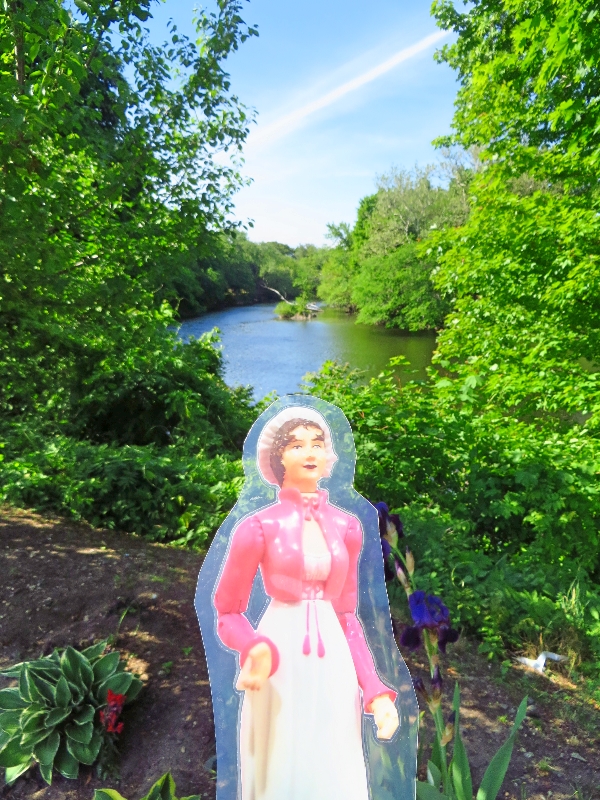
We survey the river and dam and try to imagine how it must have looked before the mills were built. Perhaps one day the mill will be gone and there will be a park here instead. 

Roosevelt Avenue Bridge built 1910

The Blackstone River

Blackstone River


Susanna imagines a garden with purple flowers blooming here one day


I have crossed my lines, turned my paper and crossed until I am unable to cross any more. I shall leave you here for now and promise to write more soon.

Yours affectionately,

Jane

Flat Jane in Pawtucket, Rhode Island (Page 4)


Flat Jane Austen in Rhode Island:

In which she learns of the Industrial Revolution and gets a peek into the future

When the mills first opened, the workers came and went as they pleased as they were used to working with the sun and the rhythm of the seasons. This angered the mill owners who insisted on their mill hands being inside at 6 in the morning until 6 at night with only a half hour break for lunch and bathroom. For all this, the girls earned 35 cents a week and the boys 50 cents. By the year [18]10, Mr. Slater could no longer hire solely children, the machines were too powerful. He now hires young women between the ages of 15-30.

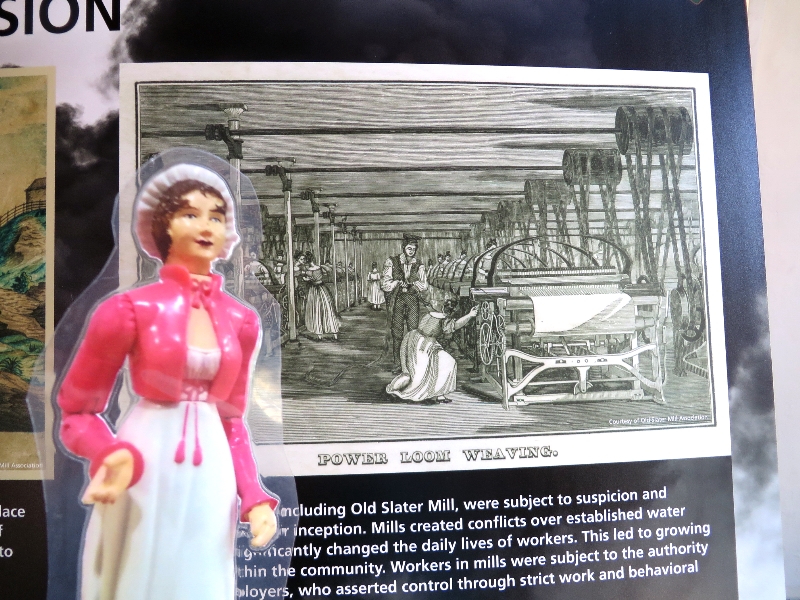
Power loom weaving was added to the Wilkinson's mill after Mr. David Wilkinson invented a powerful loom. Pawtucket has grown from a small village to a larger manufacturing town. By the 1820s, the city will have eight textile mills, six machinery manufacturers, eighty-three houses, twelve stores, two churches, a bank, two schools, the population will number 3,000 souls. 

a peek into Slater's Mill in the 1820s


With more powerful machinery, the mill owners could work the hands harder. They began ringing the bells a wee bit earlier in the morning and a bit later in the evening. The workers, lacking clocks, really had no idea how long they worked but they understood the machines were faster and they were working harder for the same pay. Their lives are strictly controlled and their time is no longer their own.

I am told that the American economy is experiencing fluxuations. There will be a Panic (recession) in '19 and '24, those annoying Americans finally established their OWN taxes (Tariff of 1824) designed to protect American manufacturing. As a result of the high tariff, American manufacturers seek to keep costs low and production and profits high.


This causes great tension between the workers and the owners. Local artisans and farmers were angry over the wealthy mill owners taking all the water for their mills. Tensions boiled over in '24 when the weavers' wages were cut by 25 percent and the workday increased by one hour. The women refused to accept lower wages for more work and vowed to walk out until conditions were restored.

On May 26, 1824, 102 young women and other sympathetic community members, blocked the entrance to the hated mill. [Editor: We do not know which one.] The strike then spread to other mills. 


As more people became involved, the strike turned into a riot, an unruly mob making "an excessive noise". The mob grew to 500 people. They then visited successively the houses of the manufacturers, "shouting, exclaiming and using every imaginable term of abuse and insult," according to the newspaper. Windows were broken in the mills and the owners' home and next day the manufacturers shut their gates and the mills did not run. 

A compromise has been reached and as of 3 June, the workers are back at work with the same conditions as before. A clock will soon be installed in a nearby church tower.

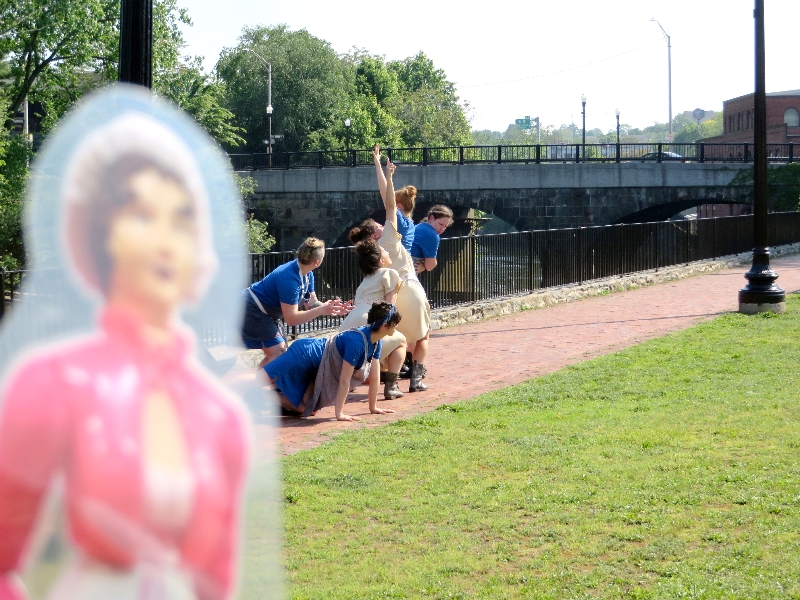
The women express their anger in a dance. 

Ah, an English country dance

I know not what manner of dance this may be.

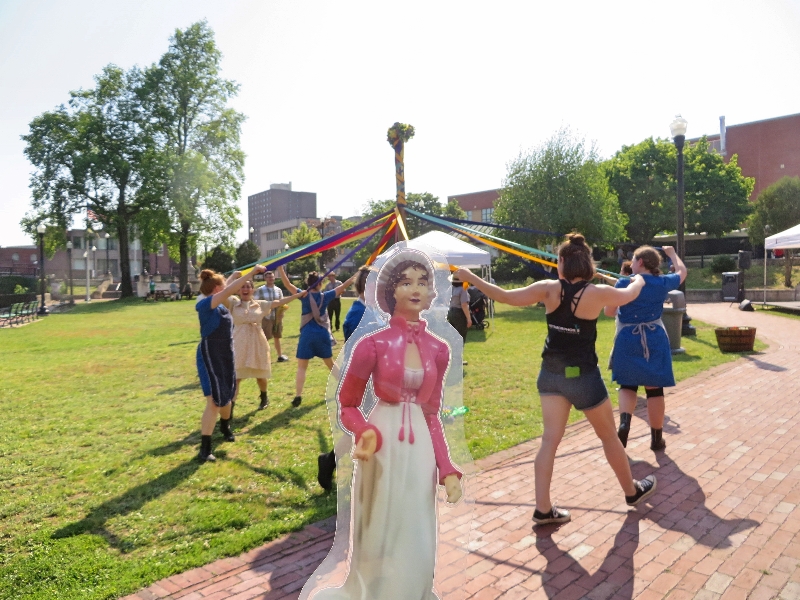
Oh, a maypole dance

A maypole dance


Editor's Note: Slater Mill is part of the Blackstone River Valley National Historic Park. The day we went the museum was commemorating the first strike by women in the U.S. in 1824. Young women portraying mill girls performed an interpretive dance. 


In commemoration of the 150th anniversary of the First Successful Cotton Mill in America this tablet was presented to the Old Slater Mill Association, present owners of this historic building in honor of the textile pioneer whose name they perpetuate. Samuel Slater, father of the American factory system. From this little mill started by Slater in 1790, grew America’s great cotton manufacturing industry whose products are known around the world.


Please turn the page! I have yet to finish writing this letter!