Showing posts with label 19th century. Show all posts

Saturday, July 23, 2022

Flat Jane Austen in Providence, Rhode Island

 Flat Jane Austen in Providence, Rhode Island:
A Visit to the Circulating Library 
(and a peek into the future)

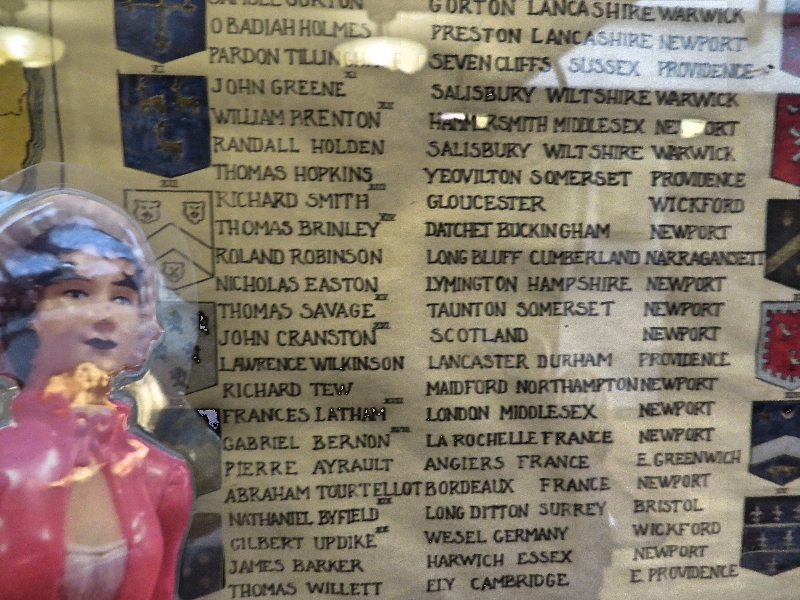
Back upstairs [1914 addition] I spy a map showing the English origins of the first settlers in Providence. I am pleased to see Hampshire represented, altho' rather surprised as Hampshire is not noted for dissenters. Nicholas Easton. Who was he? 


I peruse the shelves to learn more about the history of Rhode Island. Goodness this will take forever! Who knew there were so many books on this place? I certainly had never heard of it til now. Nicholas Easton  (1593-1675) was assistant to the governor and president of the four towns of the colony in Newport; a minister and Quaker! 
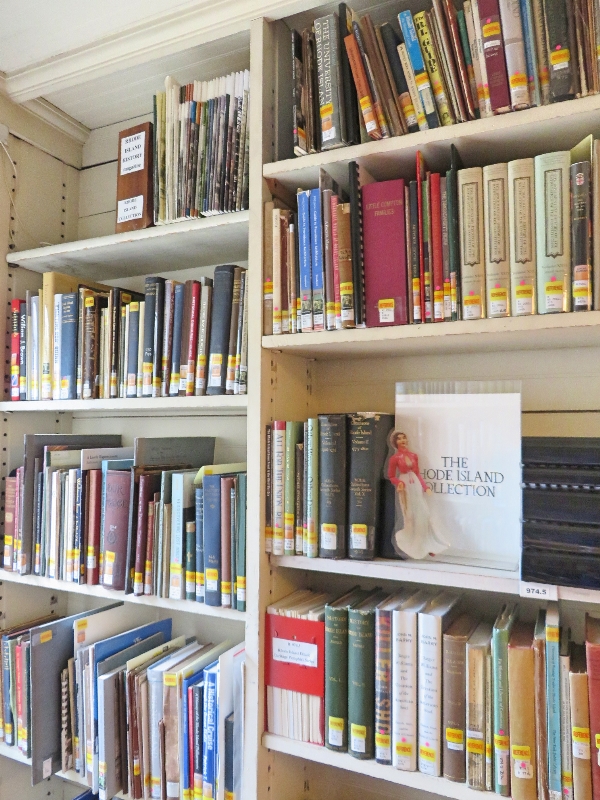


I find a quiet spot to sit and read on the mezzanine level I find myself gazing out the window.


I decided to leave off reading about history and look for a good novel. Should I choose an old favorite? Or something new?

We know Jane read Oliver Goldsmith


and even Tom Jones! 

She was a big fan of Sir Walter Scott but was slightly jealous of his success as a novelist

"Walter Scott has no business to write novels, especially good ones. —It is not fair. —He has Fame and Profit enough as a Poet, and should not be taking the bread out of other people's mouths."

Hmm Something else perhaps?
Turn to page 49 of the self-guided brochure!

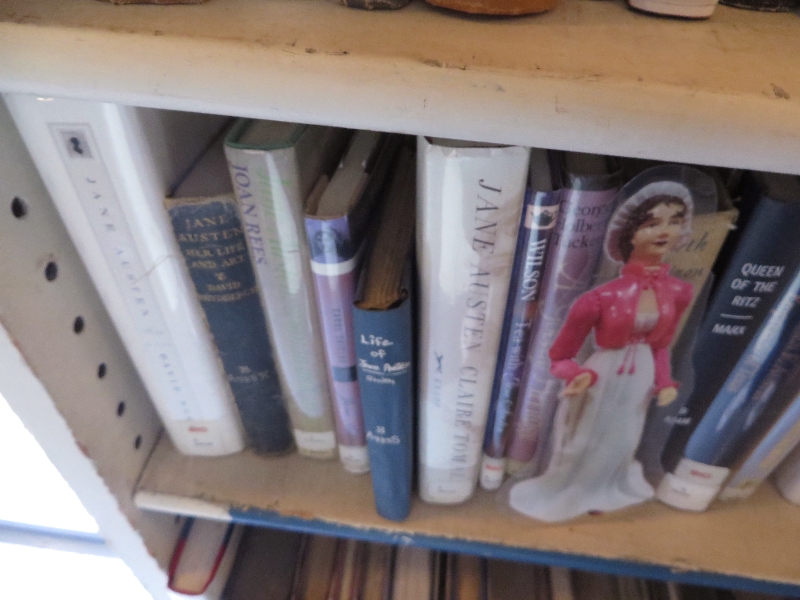
Do my eyes deceive me?  No, I see my name of these books. How peculiar! My books have not been published in America, nor have they been published under my own name. 


Why are there books about me? Books about my books? How odd.
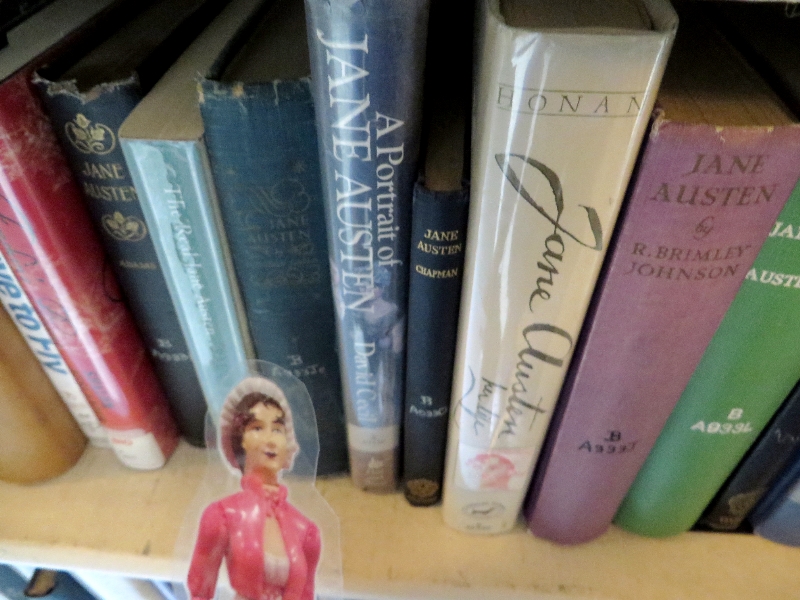


Austen biographies


Am I the most famous writer in America? How about of he century? Or in Rhode Island?

No?! Who is? 

This fellow? Edgar Allen Poe... a poet and short story writer. What type of story does he write? Horror? Is that like gothic? "The Telltale Heart", "The Cask of Amontillado", "The Fall of the House of Usher". Is this man deranged? These are all about death! Is his poetry as awful? "Once upon a midnight dreary..." I guess so. 
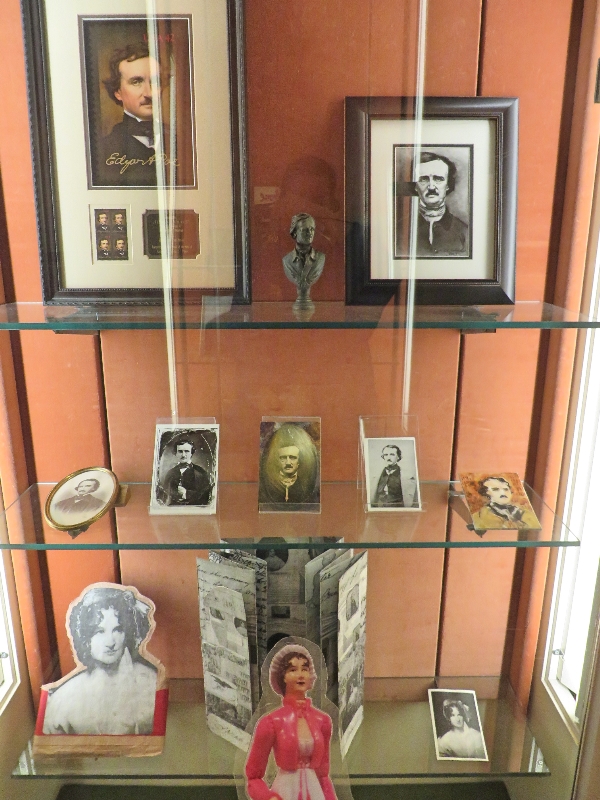


Who is the lady? His betrothed? Poetess Sarah Helen Whitman? Is she famous? No? This Poe person seems to have come to an untimely end and was lamented by no one aside from Miss Whitman. 


Editor's note: The Ath has reportedly been haunted by Edgar Allen Poe who courted Providence widow and poet Sarah Helen Whitman here in the Athenaeum reading room. They became engaged but her family forced her to break it off with him as he was unable to quit drinking. Poe left Providence and a short time later turned up in Baltimore, dead in the river wearing someone else's clothes. Sarah Helen Whitman sacrificed her own reputation to save his and make him famous. Read their story at the Athenaeum website.

The Athenaeum also boasts a lithograph of Poe's Raven from a painting by the French painter Edouard Manet.
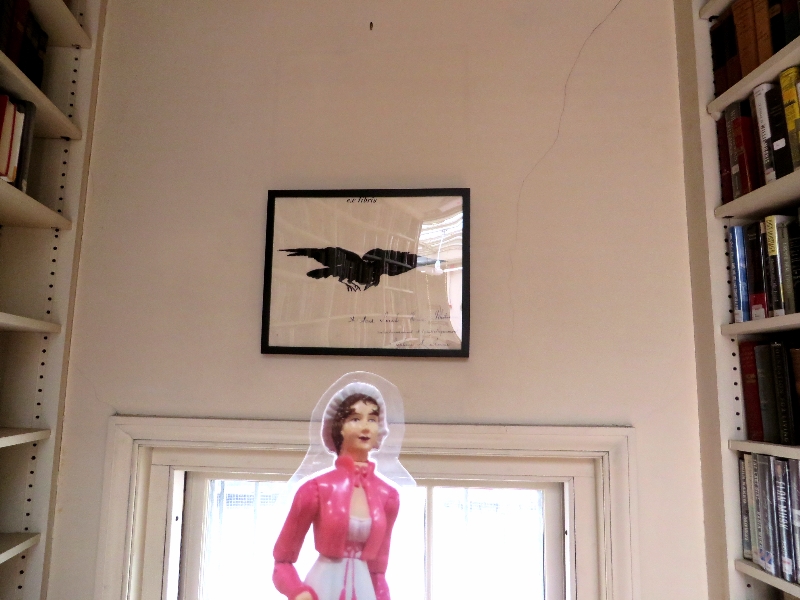
"quoth the raven, 'Nevermore'", 
The "Raven Bookplate" inscribed lithographic print from by French author Stephane Mallarmé to Sarah Helen Whitman, from a French translation of Poe's works illustrated by Edouard Manet

Actually, the most famous writer of all would shock Jane even more- H.P. Lovecraft, writer of weird science fiction, lived in Providence and loved it here. His gravestone is inscribed "I am Providence." 

I must leave off now. I shall try to write again before I leave here. Until then, I am, as always,
Yours,
Jane
Flat Jane Austen in Providence, Rhode Island

 Flat Jane Austen in Providence, Rhode Island:
A Visit to the Circulating Library 
(and a peek into the future)


Editor's Note: All photos taken at the Providence Athenaeum (1836, close enough to Jane's time) one of the oldest subscription libraries in the count
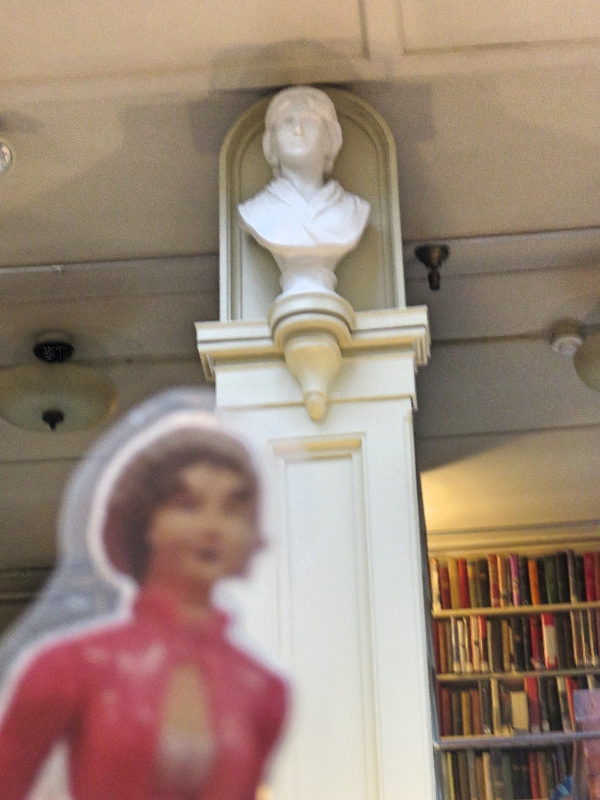
ry. All are welcome to stop in for a tour and browse. Jane had to view the brand new bust of Mary Wollstonecraft! While she was there, she got a peek into the future, in the later 19th-century and 20th-century as novels became more popular and literary criticism of HER novels became a thing. 

All are welcome to come take a tour and browse. 

June 18--

My dear friends,

At last! A visit to the circulating library! There are many volumes to browse, artwork to peruse and people to meet. 


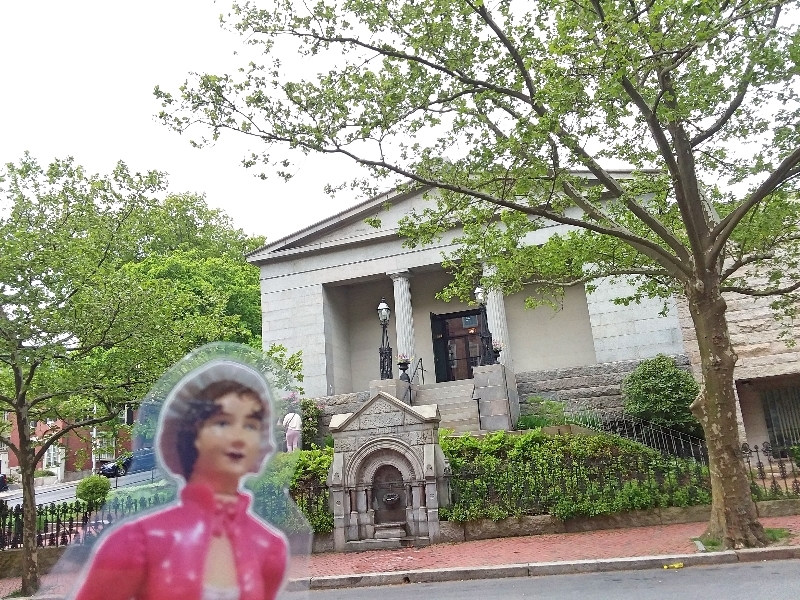
I am a bit surprised to learn that the former colonists have received a classical education. The building resembles a Greek temple such as the ones that have recently been discovered. There are even statues and busts of classical poets, gods and goddesses! Of course they also have busts and sculptures of Benjamin Franklin. 

Providence Athenaeum 1836

Richmond Fountain built to provide clean drinking water in 1873 
recently refurbished and still drinkable! 
 “Come Hither Every One That Thirsteth.” A longtime LEGEND claims that all those who drink from it are bound to always return to Providence


A view of the circulation desk, virtually unchanged in over a century 
Behind the desk, above Jane's head, is a beautiful painting known as The Hours painted by Edward Greene Malbone, a Royal Academy artist in London. It depicts three female figures represent the Greek horae, goddesses that personify the orderly passage of time.


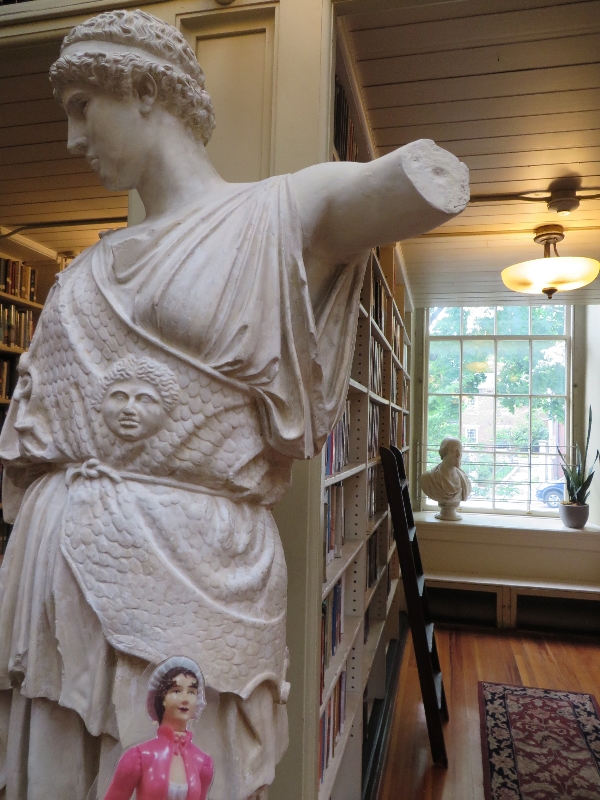
Minerva or Athena, perhaps? Athena Lemnia. Lord Elgin must have rescued this one from the Parthenon. She's missing an arm! That dreadful man! No appreciation for art. 
Plaster statue of Athena Lemnia 1913. Read the story at the Ath website.

Is this who I think it must be? Mary Wollstonecraft? I am uncertain why there is a bust of her but I approve. 

New in 2020, a plaster bust of Mary Wollstonecraft!
The editor- and Jane- were quite exited to see her on display at last. 


There are busts of good English writers as well: Shakespeare, Milton, Lord Byron (good writer, deplorable conduct). Even the Scottish poet Robert Burns is represented. Another one wanting conduct.

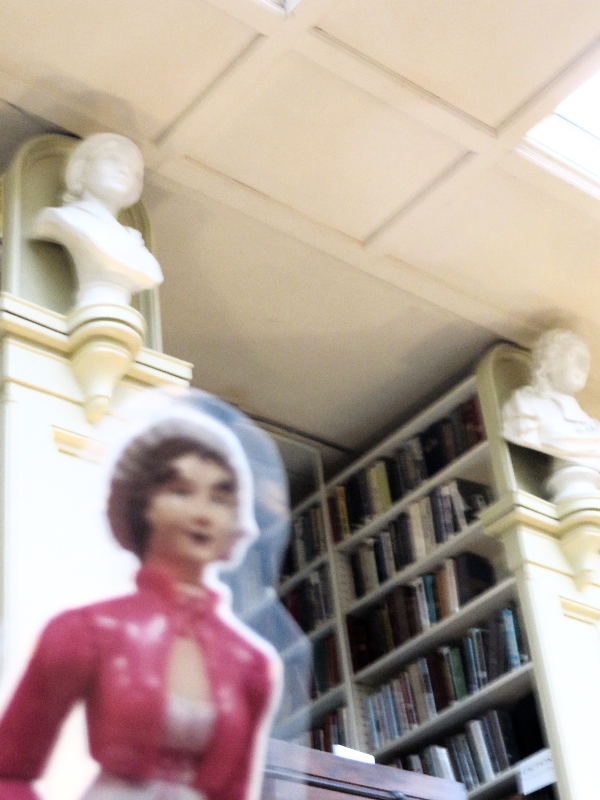
L-R : John Keats, Mary Wollstonecraft, John Milton

Another view of Mary and John Milton


On the other side we see the later mezzanine addition with busts of more writers.
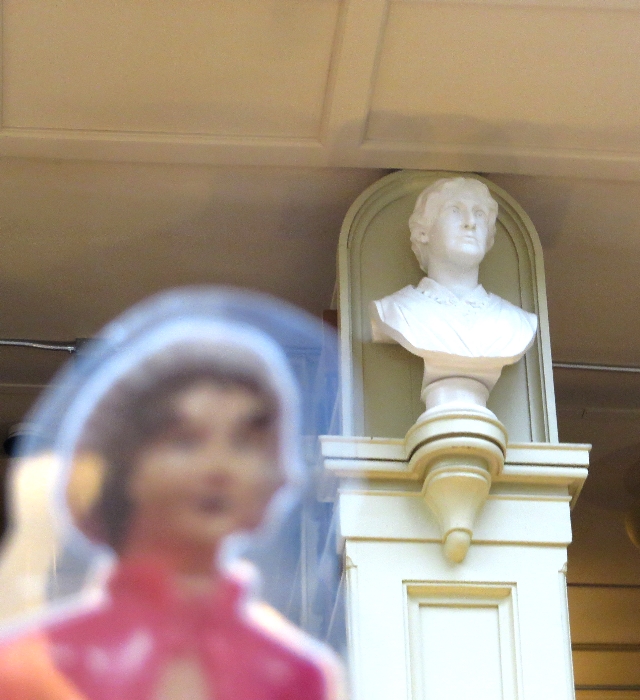
Upper level L-R: Socrates, Demosthenes, George Washington, Benjamin Franklin, William Ellery Channing and...


(and also Frederick Douglass who didn't make it into the picture). Miss Alcott is a bluestocking writer for children and Mr. Douglass is a former slave, orator, writer and abolitionist. I have never heard of either of them, of course. I shall no longer be alive 50 years hence, else in my dotage! 

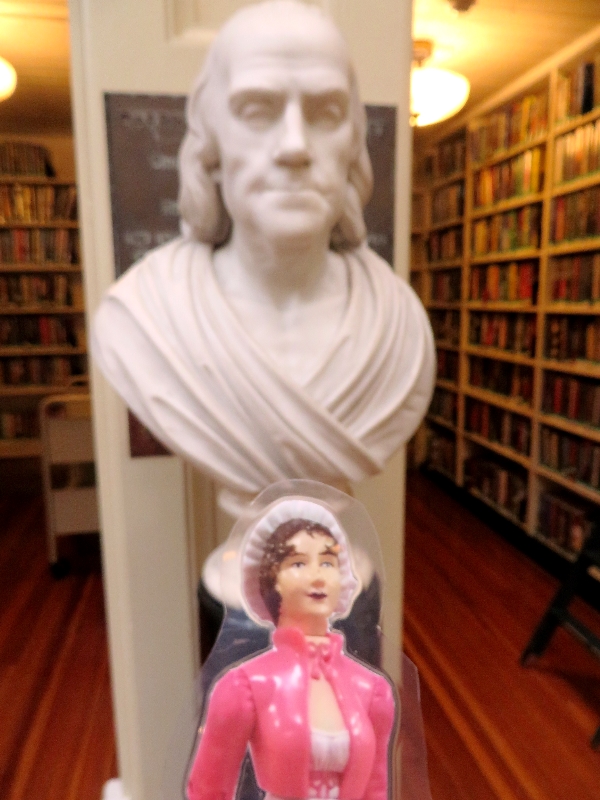
Also on the opposite side of the main room is Benjamin Franklin.


Mr. Benjamin Franklin, once an Englishman, then a traitor, now dead. He was quite witty and charming in his day though. We do miss his wit and charm and perhaps one day he will be forgiven for betraying  the British government. 

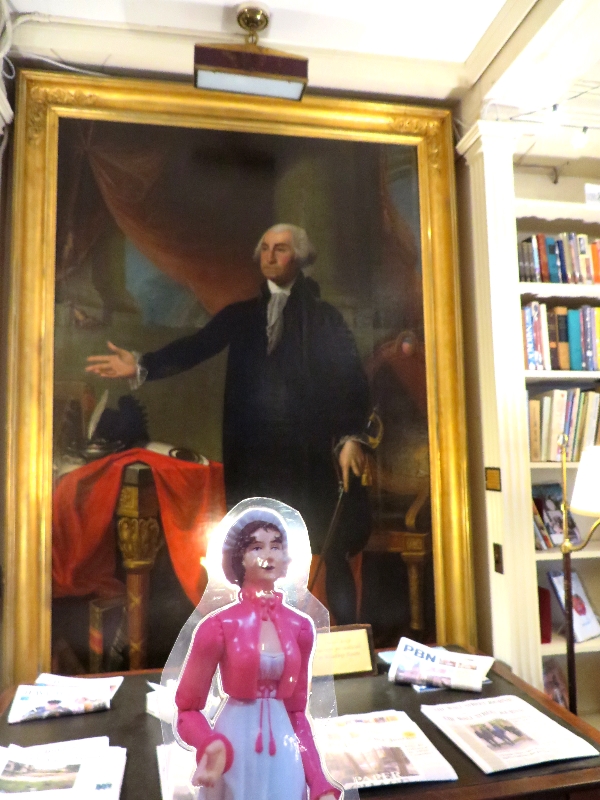
Another Englishman turned traitor, their American hero, Mr. George Washington. Pity he was such an English country gentleman. I think he too will one day be forgiven for turning against King and country. 

George Washington, ca. 1830s, anonymous, after Gilbert Stuart (1755-1828)


An extra large portrait of the late President hangs in the reading room [downstairs].

This portrait is a copy of one of the most well-known 18th-century American paintings. The painting was painted by American artist Gilbert Stuart for William Petty, first Marquis of Lansdowne, who helped shape the 1783 peace with America following the war for American independence. This copy of the Lansdowne portrait that hangs in the Athenaeum was painted by an unnamed "accomplished Italian artist." It was donated by merchant Samuel Larned (1788–1846), the Chargé d'Affaires to Chile and Peru, on the occasion of the opening of the Benefit Street building. The placement in the public halls of the library is to encourage the virtuous and patriotic character of Providence’s youth.

Belowstairs is the headquarters of the Franklin Society, a scientific and philosophic club (1838-1848). 

They say the Franklin Society reading room has been built into a hill and the building is being held up by the shelves. One day it may just sink! 

Look at this curiosity! What could it be?

They tell me this cabinet was built to house the Description de L'Égypte published between 1809-1828 by Napoleon’s Imperial Press ( Napoleon again!) It was designed by Ameican book collector John Russell Bartlett and English architect Frederick Catherwood in the manner of an Egyptian temple 
with exterior decoration based on plates in the Description. I see the plates behind the cabinet. Napoleon ordered this book published in 1802 to share the discovered of the french expedition to Egypt. This particular copy belonged to French statesman and ultra-royalist Jules Armand, Prince de Polignac. Read more in the Athenaeum's self-guided tour brochure.

Please turn the page...


Sunday, July 17, 2022

Flat Jane Austen in Providence, Rhode Island


Flat Jane Austen in Providence, Rhode Island:
In which Jane pays calls on the elite


Editor's Note: All photos taken inside the Rhode Island School of Design Museum's Pendelton House. Not all these objects belonged to one family or were displayed at the same time. The furniture in this room is in the neoclassical style built between 1785-1845. All pieces are by Rhode Island cabinetmakers.


My dearest friends,
Are you still reading? 

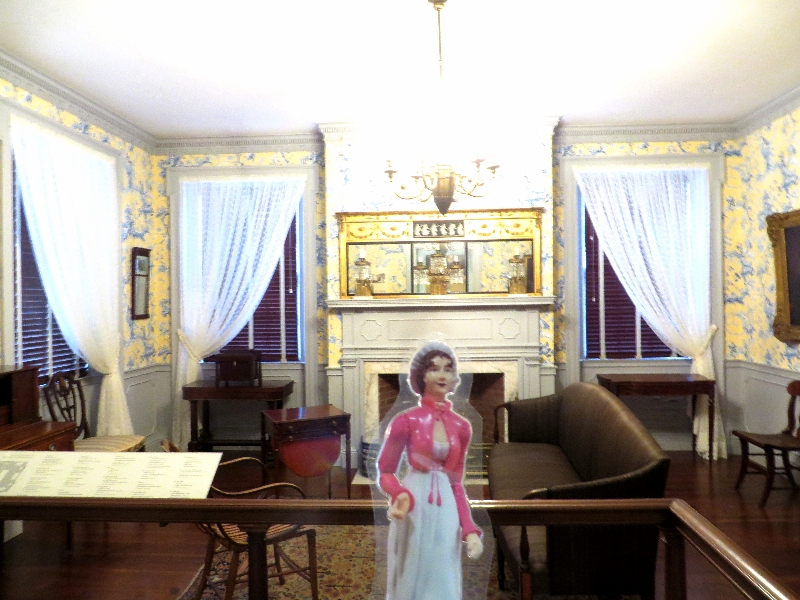
Neoclassical 18th/early 19th-century room


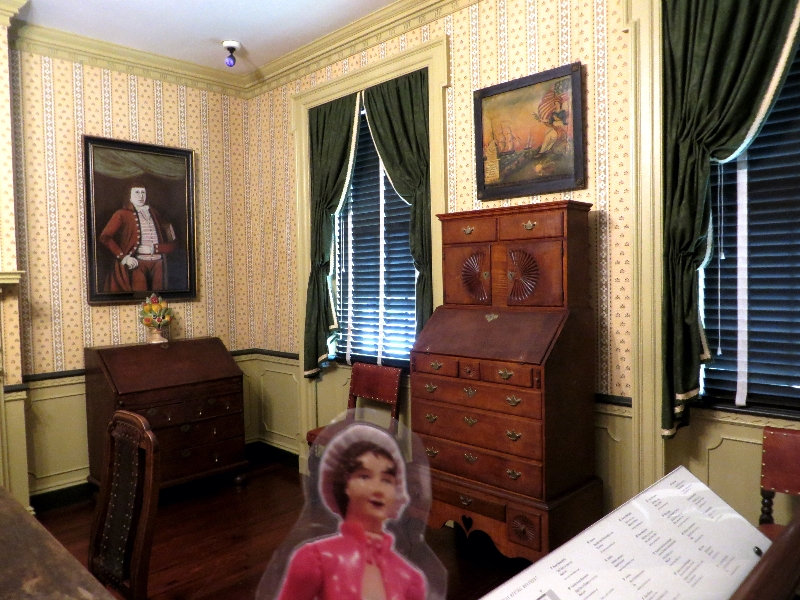
This is the home of Rev. Stephen Gano. He is quite elderly and their home is furnished in the Neoclassical style of the last century. Dr. Gano is a medical man, a Baptist minister and a freemason. Rumor has it his wife left him believing that as a Freemason, whatever that may be, he was a worshipper of the devil! 

His first wife left her mark on the home. Mrs. Allin, the girls and I sit in the ladies' sitting room and work. Behind me you see the sewing table. We do some tambour work while the men discuss theology in Dr. Gano's study. Back in '98 this type of work was new and fashionable, causing a young lady to declare it was "the handsomest thing of the kind" she "ever saw." The table was made by Simeon Hazard of Newport.

The armchair, made in the year '08 in Boston, features a new type of technology. The maker, Samuel Gregg of Boston, calls it "elastic". The chair features a bentwood seat and arms. 'Tis quite comfortable. 


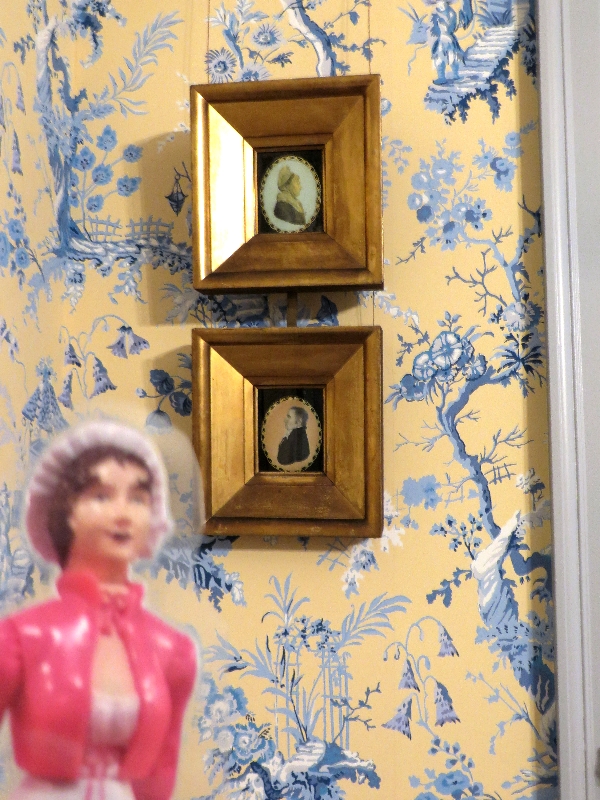
Rev. Stephen and Mary Brown Gano c. 1820; oil and pencil mounted on panel

Dr. Gano's desk-and-bookcase was made here in town (Providence) in 1785 by John Carlile, Jr. Dr. Gano purchased this new from the cabinetmaker, one of his first pieces. Providence has overtaken Newport as leader of manufacturing and trade.

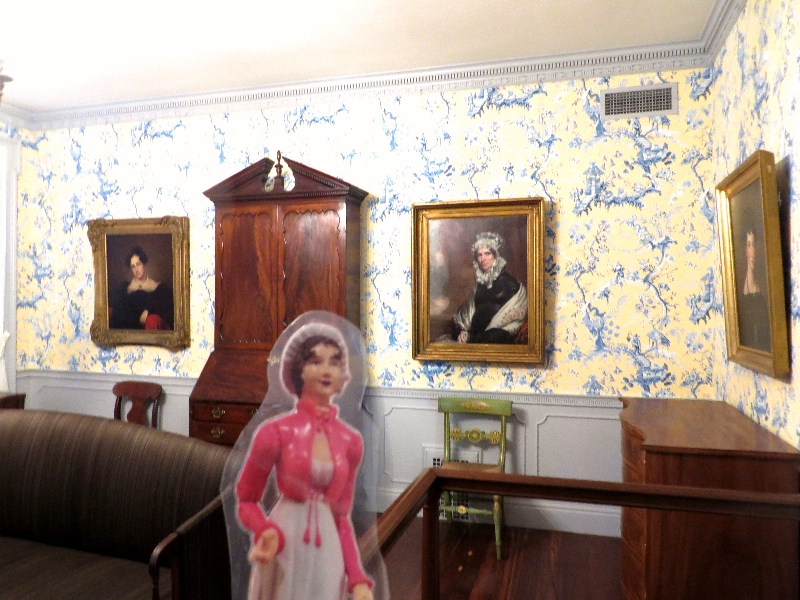
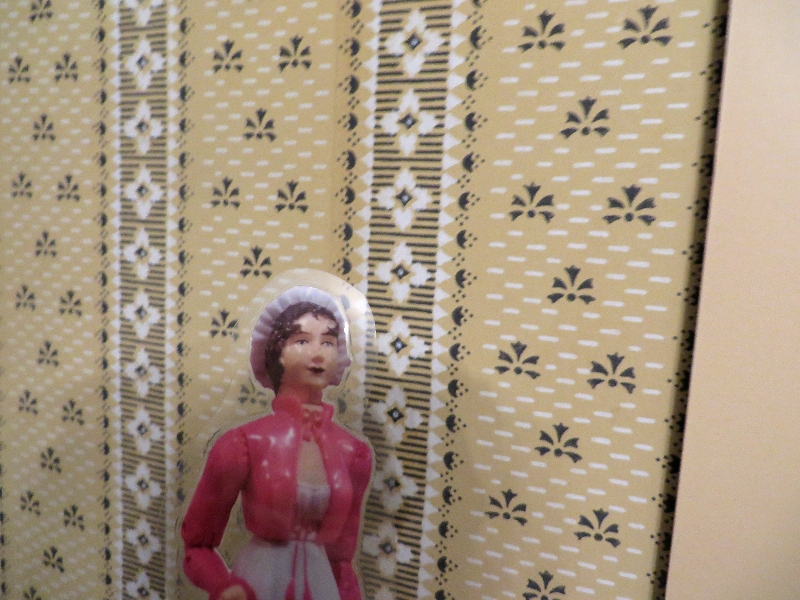
The wallpaper is a French pattern in Chinese taste. Quite surprising for a clergyman. 

Other rooms in the house are not so elegant. Dr. Gano's first wife, Mary, was the daughter of Joseph Brown. She brought with her many family pieces, antiques from the colonial period of the 17th-century.

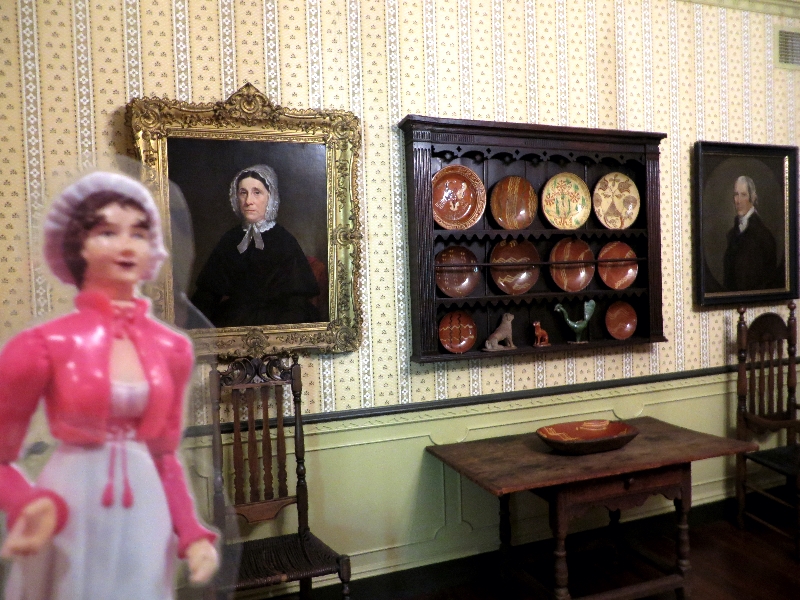
chest with drawer 1710-1740; ceramics from Pennsylvania and New England made from lead-glazed earthenware ca. 1800-1840 

Editor's note: The 17th-century objects were collected in the early 20th-century during a period of renewed interest in New England history and craftsmanship. The objects also reflect an increasing awareness of folk cultures and objects made by European craftsmen in America. Some collectors collected uniquely American art, folk art, made by people without formal training. 

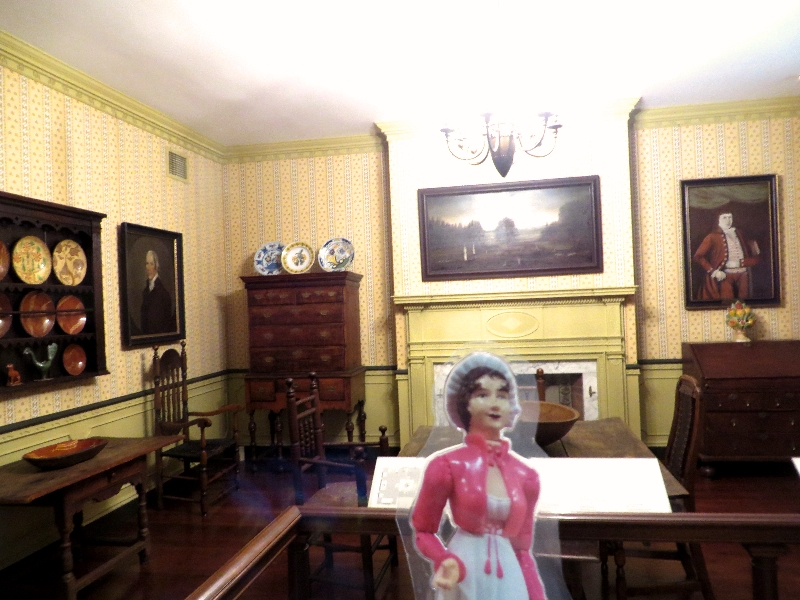
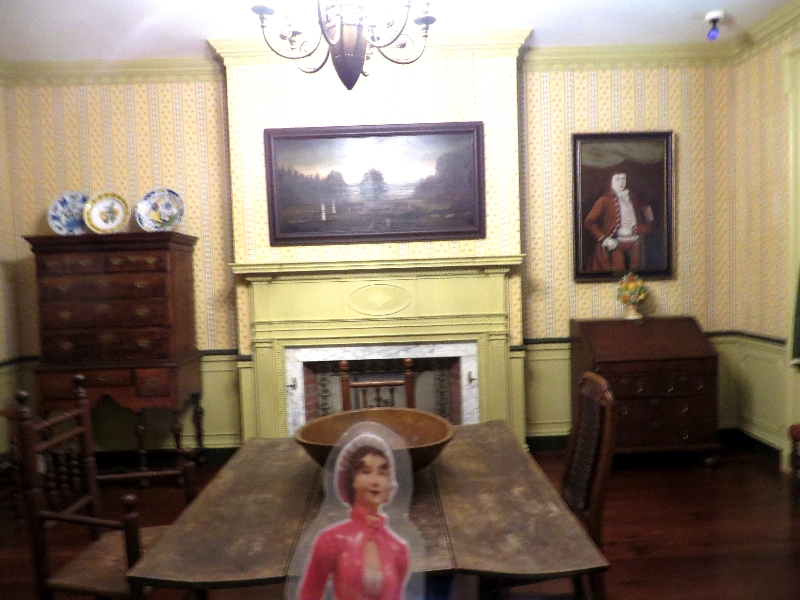
My nieces would say this dining room is positively Gothic! The wallpaper is from the last century at least, while many of the objects are much older.

William Jennys, Portrait of Mrs. Israel Ashley ca. 1800; armchair 1730-1800; 18th-19th c. American ceramics; Portrait of Israel Ashley ca. 1800


18th century reproduction New England wallpaper

The kitchen is such I have never encountered before now.

Rufus Hathaway, portrait of Seth Winsor ca. 1798; drop leaf table 1700-1735; bowl 19th c.; 
Great (Arm) chair ca. 1660-1720


Dr. Gano's study features the same wallpaper and period furnishings.
painted chalkware ornament of fruit and flowers 19th c.; desk ca. 1740; sidechair 1660-1700;
desk on stand ca. 1900

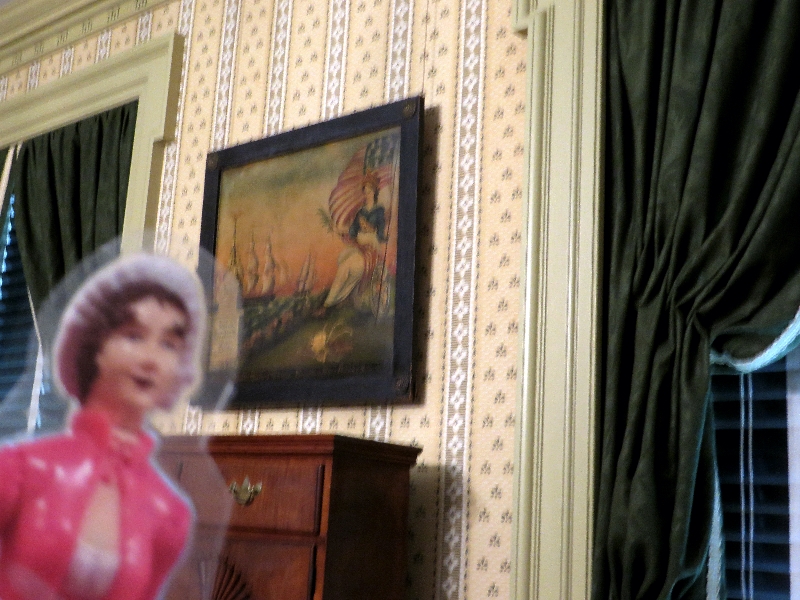
These colonial upstarts are quite proud and firmly believe they beat us in the late wars. They proudly show off their patriotism in their homes.

Emblem of the United States of America ca. 1800

Thus concludes my visits with the neighbors. I have a few other places of note to show you soon. 

Yours,
Jane

Flat Jane in Providence, Rhode Island


Flat Jane Austen in Providence, Rhode Island:
In which Jane pays calls on the elite


Editor's Note: All photos taken inside the Rhode Island School of Design Museum's Pendelton House. Not all these objects belonged to one family or were displayed at the same time. The objects in this room reflect the wealth of Rhode Islanders engaged in the China trade (between 1787-1840s). Funds from imported teas and silks helped build and furnish the elaborate homes in the neighborhood. 

"Here is the home of Mr. Sullivan Dorr and family- more China Trade wealth and another recent addition to the neighborhood. 


Built in '09, this is the most elaborate home in the neighborhood, boasting three stories, a service ell set back from the façade, and connected servants’ quarters and barn. The architect, Mr. John Holden Greene, built the home on the hill, turned the house to the side and developed terraces up the hill. It features Gothick trim on the front porch and just below the roofline. 

Mrs. Lydia Dorr was at home today so we stopped in to pay calls. Mrs. Dorr is a delightful lady. We spent considerable time viewing her China wares and passing a comfortable coze in her sitting room. 

The wallpaper is fashionable but French. 

French wallpaper ca. 1795


American furniture. Tall clock, 1816, William Stanton, Providence, 1816


Mrs. Door is delightful. An intelligent and charming woman of early middle years (34 in 1816). Her husband spent many years in China.


Lydia Door by Edward Green Malbone, unfinished, 1803
Federal mantlepiece, 1804, from the home of John H. Mason, Westminster St., Providence
removed in 1906

Lydia, as she has given me leave to call her, has had a remarkable and difficult life. She and her sister Candace were left to raise their little brothers after the deaths of their parents. She married in '04 and now there is also a hopeful Dorr family. The eldest, Thomas Wilson (currently a schoolboy of 11) is a bit rebellious. There are five younger children. Gossip has it that Mr. Sullivan Dorr is not good to his wife. 

I was tired from all this toing and froing and paying calls. Mrs. Allen was so kind as to allow me to rest.

Edward Carrington's bed with bed hangings and window curtains modeled after the interior photos of Edward Carrington's home. The bed was likely made in Boston in 1810 and is unusual for its ivory hardware.


Upon arising I admire my reflection in the glass and fix my cap.

Dressing bureau, Providence, featuring ivory; Dressing glass ca. 1800, Providence


Mr. Sullivan Dorr was engaged in the fur trade business early in life. At the age of 20 he went to Canton China to work for his brothers. He was one of the first Americans to live there for an extended time. He stayed there until 1803 when he returned and settled in Providence. Currently he is engaged in mercantile pursuits.

We drink tea from a Cantonese tea pot.

Settee, Chinese for export, early 19th c,. Asian hardwood and cane; porcelain tea and coffee service ca. 1790-1800

Please turn the page

Flat Jane Austen in Providence Rhode Island

 Flat Jane Austen in Providence, Rhode Island:
In which Jane pays calls on the elite


June, 18-
My dear friends,

It is nearly time to leave this unusual place and move on to visit other friends. First, though, I pay calls on the neighbors. 

Many of the elite residents of Providence earned their wealth in the China trade. Next door to Mr. John Brown's family lives another Brown, Mr. John Nicholas Brown, Jr, (nephew of Mr. John Brown) and his family. 

Now the John Nicholas Brown Center for Public Humanities and Cultural Heritage
at Brown University

The house was built in '91 for Colonel Joseph Nightingale and sits on one acre of land. Mr. Nightingale was a Revolutionary and merchant of the firm Clark & Nightingale. They sold goods from the East Indies, stationary and hardware at their shop at the Sign of the Frying-Pan and Fish. They also made rum which was traded for human flesh.

Side of the house, possibly later addition

back wing, probably later addition


This Mr. Brown is an industrial leader, state representative, co-founder of the Providence Athenaeum and generous donor to Rhode Island College. As such, the college was renamed for him. 

Around the corner is the home of Mr. Edward Carrington, a China Trade merchant and associate of the Brown family. It is of recent construction, only begun in '10 for a Mr. John Corliss, Mr. Joseph Nightingale’s brother-in-law. Construction was interrupted by a series of legal conflicts with Spain. Mr. Corlis ran out of money before the house was completed. He removed to Kentucky to try his hand in tobacco.  

Corlis-Carrington House, a home away from home for community leaders
Be sure to look inside and take a tour to see period inspired furnishings


Mr. Edward Carrington recently returned from duties as American consul in Canton, China. He has married a shipping merchant's daughter, the former Loriana Hoppin. Mr. Carrington's office is located to the side of the house. How... American.


This house at 2 George Street, was built for Mrs. Eliza Ward, daughter of Mr. Joseph Brown, the architect. 'Tis newly built a few years previous in 1814. Mrs. Ward is a widow and lived with her brother until her home was completed. A widow living alone? It is not a truth universally acknowledged that women can not take care of themselves?! It seems as if American ladies are more independent than we are.
Eliza Ward House


The interior is most elegant with ceiling cornices, and elaborate, delicate wood trim. Mrs. Ward enjoys hanging French wallpaper. A particular favorite is Les Rives de Bosphore (Banks of the Bosphorus) printed by Joseph Dufour. It is rather... loud, much like the French.

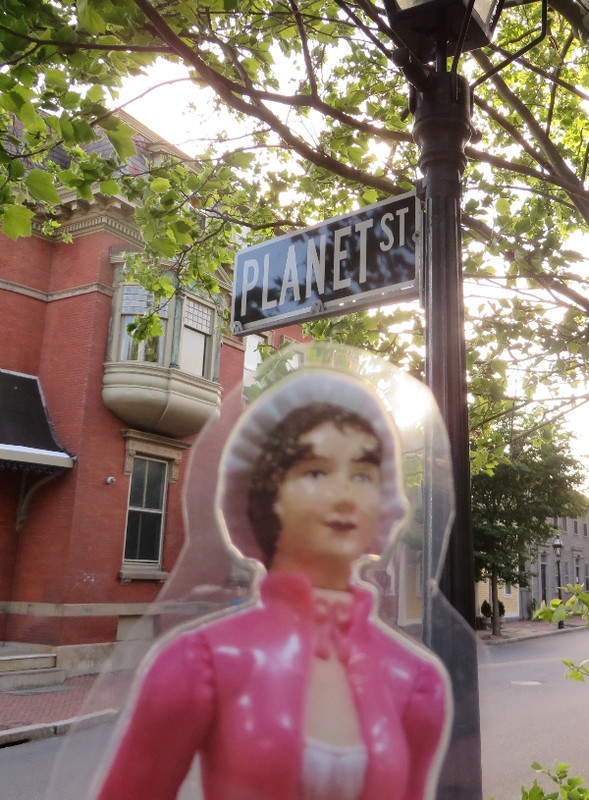
Susanna's family home is located near Planet Street, named for the Transit of Venus and the previously mentioned Congregational Church. 


Flat Jane at the RI School of Design's Pendelton House


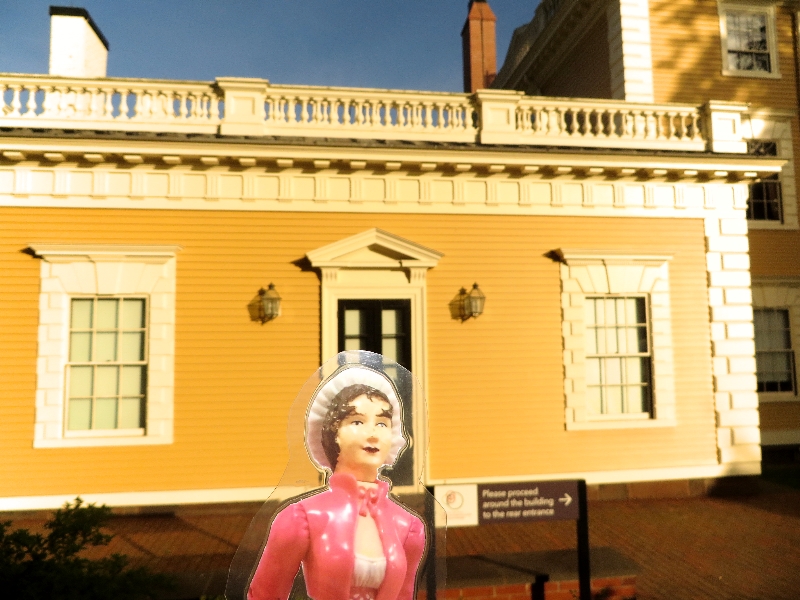
 Charles Pendelton House, a reproduction Federal Era home built for the purpose of displaying the collections of Charles L. Pendleton (1846-1904), given to the RISD Museum in 1904.


editor's note: This building is in actuality at the opposite end of Benefit Street but in keeping with the Federal style, I have placed it with the other grand homes built in Jane's day.


Her family is well connected and her father works for one of the China trade firms.

Reproduction Federal era home


I shall paint a picture with my words to shew you how the inside looks.

Please turn the page