Wednesday, March 18, 2020

Women's History Month

Ida Tarbell

journalist, crusader, citizen reporter


This year I am teaming up with my friend Samantha in 1904 to share a story about a great woman from her time. Ida Tarbell (1857-1939)

I will let Samantha begin.

Dear friends,

I am here today to tell you about one of my heroes or should I shall heroines? Ida Tarbell. Let me begin with some background information. Way back before I can remember, in the 90s, newspapers competed to tell the most sensational, but maybe not the most truthful stories. Mr. Pulitzer in New York and Mr. Hurst in California filled their papers with "yellow journalism." 

Then some journalists aspired to tell the truth about all the bad things that are happening. President Roosevelt calls these journalists "muckrakers." The subject of my presentation and essay is Ida Tarbell, a muckraker or citizen reporter for McClure's magazine.

Ida Tarbell was born in a log cabin on November 5, 1857 on a farm in Eerie County, Pennsylvania.  That same year Ida was born, her family lost their money in the Panic of 1857. A few years later their fortunes would change. In '69, the family moved to Titusville, Pennsylvania following the oil rush. her father made oil derricks and Ida spent her days playing in the oil fields.
Young Ida Tarbell poses for a fancy photograph

In the '70s, something big happened that would change Ida's life and shape her future career. Ida's father's business was crushed by the South Improvement Company, owned by John D. Rockefeller. Any small companies that tried to compete failed. Ida's hometown was destroyed. Many friends, including her father's business partner, lost everything. She says, “There was born in me a hatred of privilege.”

early oilfield in Titusville, Pa.

Ida attended school, discovered science and went on to graduate college with a degree in science. She was first in her class and the only woman!
Young Ida Tarbell studies natural science and biology

After college and teaching school for a bit, Ida wrote for The Chautauquan, a teaching supplement for home study courses at Chautauqua, New York, encouraging adult education and self-study. She became managing editor in 1886, proofreading, answering reader questions, providing proper pronunciation of certain words, translating foreign phrases, identifying characters, and defining words. She began writing short pieces and then longer ones, always imbued with moral content, grounded in unwavering rectitude.

Ida Tarbell teaches school

At this time, Ida began investigating. She started with a claim in an article in The Chautauquan claiming only 300 women held patents and women would never become successful businesswomen.
Ida Tarbell leaves the classroom, gathers her notebooks and pencils
and heads to Washington, DC to do research

Ida investigated and discovered there were actually more than 10 times that number!


The first page of the Patent Office’s list of women patentees, 1888. 


She wrote an article titled "Women as Inventors". She stated three important truths 1) that women have invented a large number of useful articles, 2) that these patents are not confined to clothes and kitchen devices and 3) that invention is a field in which women have large possibilities.

Ida uncovered women like Mary Walton, a New Yorker who tried to rid her neighborhood of the bad air and loud noise from the elevated railroads. She succeeded where Thomas Edison failed.
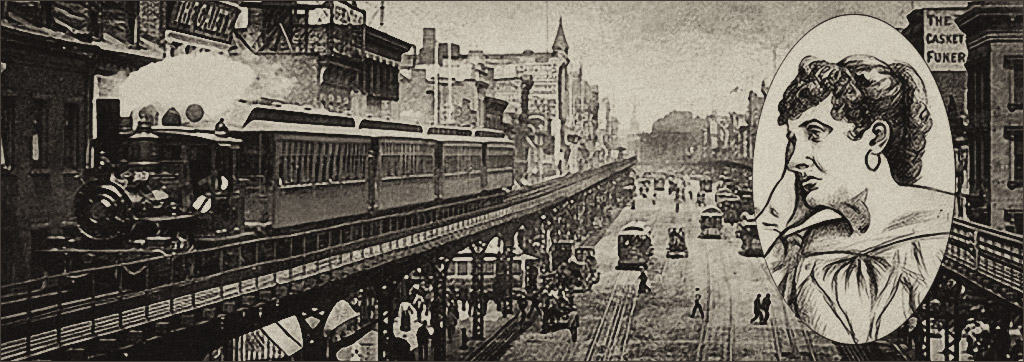
Mary Walton, inventor and two-time patent holder

Ida then wrote another article on women in journalism arguing that journalism was a field wide open for women. (GrandMary was quite shocked, I assure you but Aunt Cornelia believes women can do anything they set their minds to.) 

Ida decided she was tired of being a pen for hire and it was better to work for oneself than to be a hired man (or woman). She took her savings and headed to Paris, France!
Ida Tarbell packs her bag and heads to Paris in the gay 90s


(This is me in Paris but long after Ida Tarbell was there).

In Paris, Ida lived alone with friends from The Chautauquan. How scandalous! She researched great women writers of the past to rescue them from obscurity. She also enjoyed exhibitions of those new impressionist paintings.


 "The blues and greens fairly howl they are so bright and intense." Ida Tarbell


To earn money, Ida went back to writing for hire for several American newspapers.

Ida Tarbell writes for American newspapers
                                               
She was still learning how to write and research like French historians.

Researching and writing 


While working on the biography of French revolutionary leader Madame Roland, Ida discovered this woman was not really a modern hero. Madame Roland behaved as badly as the men during the French Revolution and echoed her husband's beliefs. Ida's eyes were opened to a new worldview. She began to idolize independent thinkers.

Ida Tarbell's biography of Madame Roland

While Ida was in Paris, she received a visit from a publisher named Samuel McClure who tried to woo her to be an editor his fledgling magazine, McClure's. Instead, Ida decided to write freelance articles. In the early 90s she wrote articles about women intellectuals and writers in Paris as well as scientists. She hoped her articles would provide a blueprint for women journalists and writers.

Ida Tarbell writes for McClure's magazine

Ida moved here to New York in '93. She began researching and writing a series on Napoleon Bonaparte to scoop a rival publication. This series launched her professional career and doubled, then quadrupled the circulation of McClure's. Later, the series was turned into an illustrated book that became a best seller. Grandfather Samuel had a copy on his bookshelf. Uncle Gard let me borrow it to show you.
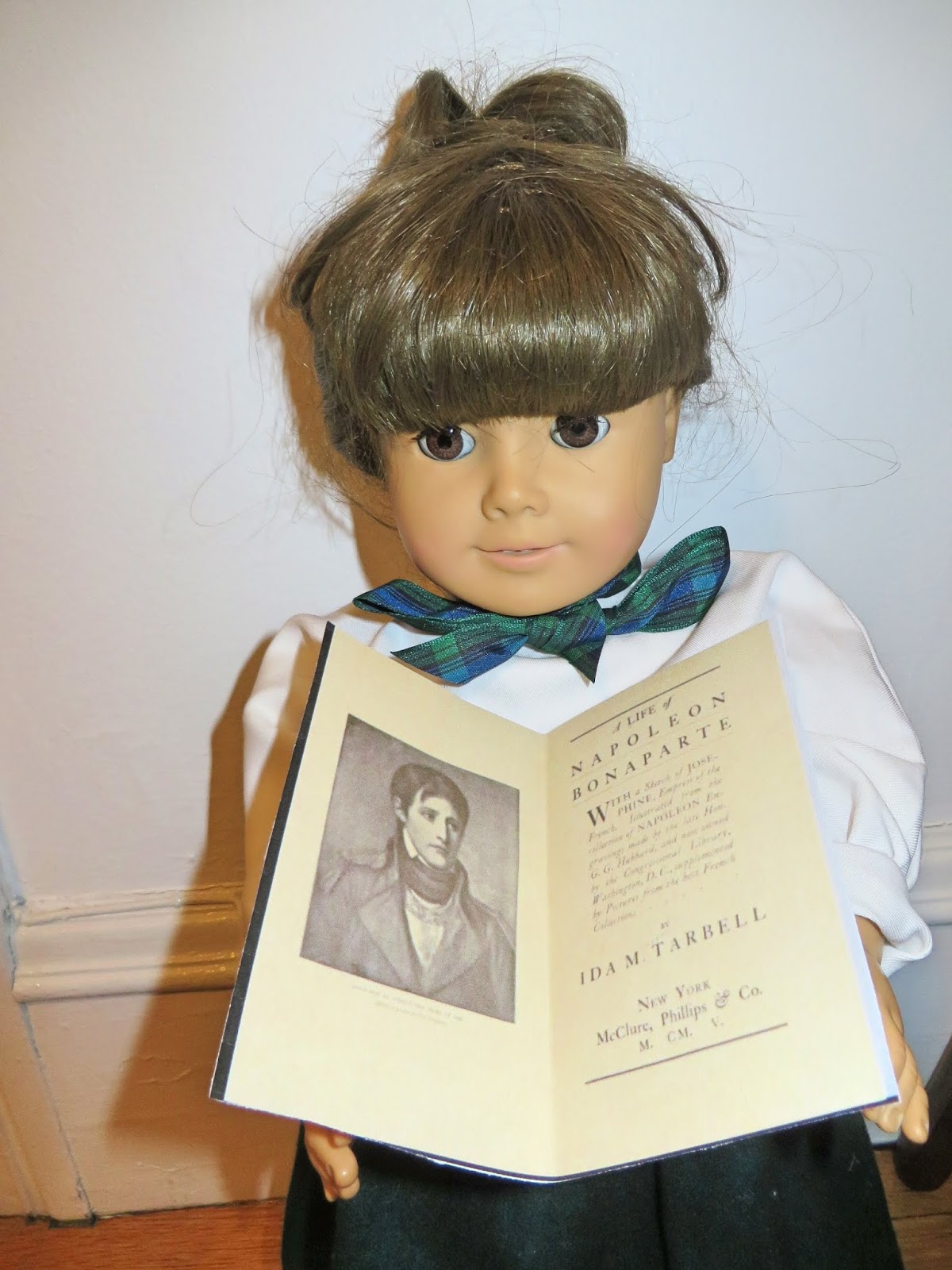
Life of Napoleon Bonaparte by Ida M. Tarbell


Ida's next opus was a 20-part series on Abraham Lincoln researching deep into the backwoods and talking to people who once knew him. Again the articles were collected in a book and made Ida Tarbell's reputation.

Grandfather Samuel had this one too.

The Life of Abraham Lincoln by Ida M. Tarbell

Then she got into writing about current events during the Spanish-American War. After that, in '99, Ida moved permanently to New York working as an editor for McClure's. The magazine decided it was time to expose the ills of American society. At that time she began writing the most important piece of her career, a piece that exposed the not very nice business practices of Standard Oil. She got first-hand information on how the company never played fair. They kept crushing the little businesses to get big and powerful. Through interviews and research, Ida learned how Standard Oil secretly conspired, spied and lied.
Ida Tarbell's series on John D. Rockefeller and Standard Oil Nov. '02 and Jan. '03
 Two years ago, in '04, the 19 articles were published in a book The History of the Standard Oil Company. The book is a huge best seller and changed journalism from "yellow" to mucraking. People are outraged and demanding change. Ida Tarbell has become the most influential woman in the country.

Uncle Gard's copy of The History of the Standard Oil Company
by Ida M. Tarbell


Ida Tarbell is one of my heroes because she has an important career informing the public about past present issues. She's a muckraker! I also admire her because she shows women are smart, can think independently, have careers and don't need a man to tell them what to do. Ida is working hard in a man's world and surviving and thriving. I want to be like her when I grow up! I already wrote an essay about child labor in the thread factories, after all.


Thanks Samantha! I'll take it from here.

Monday, March 9, 2020

Mini Felicity Visits the Old North Church

To review: It's spring 1775, the British have taken over Boston. They are coming for our guns! What
to do? The citizens of Massachusetts have a plan. This is where that Paul Revere fellow comes in.

Mini Felicity reviews the plan of action for rebellion against the Crown

The Sons of Liberty have come up with a plan. They will send messengers to warn the colonists the British are coming. They will send their two best riders William Dawes and Paul Revere to ride halfway to the town of Lexington. Their job is to warn Samuel Adams and John Hancock. In case they get caught, Paul Revere has come up with a backup plan. 30 extra riders will be placed across the river in Charlestown. Militia leaders should look to the steeple of the Old North Church, right above where I'm standing, every night for signal lanterns. The number of lanterns will tell the riders when the British army is leaving Boston and how. One lantern means the British will march over land and two means the British will come by sea. (a ha! So that's why he's important).

Mini Felicity studies a map of Boston
                       
See the map here? The British MAY march across Boston neck, that narrow strip of land that connects Boston to the mainland. That could take a long time. The British may choose to take a shortcut and tow across the Charles River into Cambridge saving time.

                           
The British are coming! “One if by land, two if by sea.”
 It's now the 18th of April, '75, almost Felicity's birthday.... No wait... Boston... The redcoats are coming! They're coming by sea! Paul Revere is ready to ride and sound the alarm!

He said to his friend, “If the British march
By land or sea from the town to-night,
Hang a lantern aloft in the belfry arch
Of the North Church tower as a signal light, —
One, if by land, and two, if by sea;
And I on the opposite shore will be,
Ready to ride and spread the alarm
Through every Middlesex village and farm,
For the country folk to be up and to arm.”

Mini Felicity sees the famous window

Paul Revere has asked two men to come to the church last night, 18th April. One is the caretaker, Robert Newman. The other man is a friend of Mr. Revere's, Captain John Pulling, Jr. The two men came into the church's front door, locked it, climbed a staircase in the back corner. Once in the upper gallery, they squeezed behind the pipe organ. Then they went through a small door in the tower. The men climbed the winding stairs and went up a ladder 8 stories. It was pitch black. At the top they used flint and steel to light two lanterns.

Mini Felicity in front of the famous window

This is the window of the bell tower. Mr. Newman and Capt. Pulling lit the two lanterns and held them out the window facing towards Charlestown for sixty seconds. That was all the time that was needed. I can fit up there no problem! They should have asked a kid.

Plaque commemorating the signal lanterns 

Then he climbed the tower of the Old North Church,
By the wooden stairs, with stealthy tread,
To the belfry-chamber overhead,
And startled the pigeons from their perch
On the sombre rafters, that round him made
Masses and moving shapes of shade, —
By the trembling ladder, steep and tall,
To the highest window in the wall,
Where he paused to listen and look down
A moment on the roofs of the town,
And the moonlight flowing over all.

A plaque memorializing Robert Newman
                                              But mostly he watched with eager search
The belfry-tower of the Old North Church,
As it rose above the graves on the hill, 
Lonely and spectral and sombre and still. 
And lo! as he looks, on the belfry’s height 
A glimmer, and then a gleam of light! 
He springs to the saddle, the bridle he turns, 
But lingers and gazes, till full on his sight 
A second lamp in the belfry burns!


Behind mini Felicity is the steeple with belfry immortalized in Longfellow's poem
The riders rode off to warn the surrounding countryside the British were marching to steal their ammunition. An hour later, Paul Revere arrived in Charlestown. He borrowed a horse and began his own ride.

Following along with Paul Revere

Mini Felicity admires a drawing of the Old North Church

Even though Paul Revere was captured by the British, other men rode on. The message reached as far north as New Hampshire and south to Connecticut. The next day, when the British arrived in Concord, they found an armed and waiting militia. Oh dear, I fear what may happen next.

You know the rest. In the books you have read,
How the British Regulars fired and fled, —
How the farmers gave them ball for ball,
From behind each fence and farm-yard wall,
Chasing the red-coats down the lane,
Then crossing the fields to emerge again
Under the trees at the turn of the road,
And only pausing to fire and load.

Mini Felicity learns about the men who died in the Revolutionary War
Susanna tells me that in the future, the country will be divided over the issue of slavery. A poet by the name of Henry Wadsworth Longfellow, a Bostonian, wrote a poem to create a national hero. Paul Revere was an example of the country's noble past.

Henry Wardsworth Longfellow

That poem Susanna knows is so popular people all around the country worked to have the steeple restored. We did not have time to go up.

Mini Felicity learns about the preservation of the church steeple

Here is the pew of Rev. Mather Byles

Mini Felicity learns about the Loyalist preacher Rev. Mather Byles

Rev. Byles is a preacher, poet and Loyalist! (and some sort of cousin to Susanna's guardian). He was the second rector here at the Old North Church (1768-1776). The parishioners are about to fire him on April 18, 1776. They did not like the fact he was a Loyalist. To be fair, the parishioners stopped paying him because he was a Loyalist and partly because they ran out of money after the port was closed. He considered moving to Portsmouth, New Hampshire. Later he will move to Canada.

Outside the church they have a beautiful Georgian garden. I look for signs of spring.

Mini Felicity spies signs of spring

Spring is springing. I see crocuses trying to pop up.
Mini Felicity in the Georgian garden behind the Old North Church

 I must return to my owner now and tell her what I learned. I am sure she will be back in Boston soon to tell you more about Paul Revere. 

Mini Felicity Visits Boston's Historic North End

My Felicity doll's adventure didn't end with chocolate. Read on to see what else she learned and how much I have to tell her.

"Here I am in Boston's North End. This is the home of a great number of those strange Puritan people. In the future, Irish, Italian and Jewish immigrants will move in and the area will become known as the Italian section of Boston.
Mini Felicity at Clough House in Boston's North End

Here you can see a historic home from before my time and how it has changed and grown from then to your time. Clough House (rhymes with "fluff") was built between 1712-1715. Master Mason, Ebenezer Clough, lived here. He helped build the church here in the North End of town. (That's the true church, the Church of England, not one of those Puritan meetinghouses). Mr. Clough built other, similar houses in the neighborhood. One house belonged to somebody you and I both know about - Benjamin Franklin! His sister Jane lived there.

Mr. Clough's family will live here for only two generations. In 1806 a third floor was added and the house became a tenement for immigrant families.

Mini Felicity looks at architecture rendering of Clough House in 1806


180 families will live here over the next 150 years!

Clough House
In the way far off future, in 1959, the house will become part of the church holdings. In your day it will be a museum space to interpret the history of the North End.

Who is this person and why does he have such a giant statue?

Mini Felicity with Cyrus Dallin's Paul Revere statue

Paul Revere? Isn't he a silversmith and engraver? What on earth has he done to deserve this statue? My human, Susanna, starts to recite a poem she learned from her friends Addy, Samantha and Molly.


LISTEN, my children, and you shall hear
Of the midnight ride of Paul Revere, 
On the eighteenth of April, in Seventy-five; 
Hardly a man is now alive 
Who remembers that famous day and year. 


Oh, so he's some kind of hero? Let me go find out what happens next year that's SO important several generations of school children know this man's name.

Here is the Old North Church 
Mini Felicity behind the Old North Church


Mini Felicity in front of the Old North Church

What is going on in Boston? What is this Old North Church? Let's go in and look around, shall we.


Here is a map of Boston. It's on a peninsula, surrounded on three sides by water, much like Williamsburg.

 It looks similar to the Bruton Parish Church in Williamsburg. Susanna's Puritan meetinghouses are much more plain in comparison.


Mini Felicity inside Old North Church

Each family has their own pew. They may decorate it as they wish.


I am trying to find out more about the man on the horse. Why is he so important? First, I need to learn about what has been happening in Boston lately.


A lot has happened since I arrived in Boston. A year ago, in the spring of 1774, the British Crown decided to punish Boston for the Boston Tea Party.

The British Parliament all the way in London passed what the Bostonians are calling The Intolerable Acts. The port of Boston has been closed and Bostonians are required to pay for the lost tea. Back home in Virginia, I remember when the House of Burgesses passed a resolution calling for a day of fasting and prayer in sympathy with Boston. Then Lord Dunmore dissolved the Burgesses, our freely elected representatives. My father was not happy. The same thing is happening in Boston.


The port is closed, the Massachusetts Provincial Congress has been dissolved and British General Thomas Gage appointed military governor! The people's right to assemble is gone and a strict curfew is in place! People can not come and go as they please. The British army is on the way - 4000 troops are coming to occupy Boston! Officials charged with a crime growing out of their enforcement of the law or suppression of riots will be sent to another British colony or even Britain to be tried. The new royal governor also has the powers to remove judges, marshals and justices of the peace. When the British soldiers arrive, the governor will house them in unoccupied barns and houses.

Mini Felicity boos in front of the pew of General Thomas Gage

Governor Gage is afraid people will arm themselves against the royal government. Governor Gage has decided to reclaim all government arms and munitions stockpiled around the colony! In September '74 he went to seize the gunpowder in Charlestown across the river.

Do you think the citizens of Massachusetts Bay Colony were happy with that? No way! Remember when Lord Dunmore tried to steal our gunpowder and real Felicity warned everyone? I think I know what is going to happen now!


The Massachusetts Provincial Congress continues to meet illegally in Concord, twenty miles west of Boston. They made plans to defend the colony against the British: build an alarm network, form companies of minutemen, and aiding towns in storing ammunition. The leaders of the Congress were some men you may have heard of, says Susanna. Do you know Sam Adams (he has nothing to do with beer, giggles Susanna) and John Hancock? They are wanted by the British! They fled 8 miles away to Lexington. General Gage plans to send 700 troops to seize munitions in Concord.

Mini Felicity learns about the plan the Massachusetts Provincial Congress has to save their colony

What are the Massachusetts colonists planning? This is where that Paul Revere man comes in. 


Friday, March 6, 2020

Mini Felicity Learns How to Make Chocolate

Meet Felicity! This is my doll Felicity. I named her Felicity because she looks very much like my friend Felicity in 1774. I even got her the same dress as Felicity. A few weekends ago I sent her on an adventure in colonial Boston! She learned how to make hot chocolate! No sillies, in 1774 cocoa powder was not invented yet. No microwaves either. You had to make drinking chocolate from scratch. It is soooooo good and worth the effort. I will let Felicity tell you all about it.

"Good day from Boston! I am here at Captain Jackson's Chocolate Shop learning where my favorite drink comes from. Chocolate has been made in Boston since 1682.


Chocolate comes from the cocoa tree (cacao). About 3000 years ago (or 1500 BCE Susanna's/your time) the cocoa tree was domesticated in the Amazon region of South America.

The Aztec king Montezuma drank chocolate many times a day in a show of strength and power.


This chocolate was made from ground cocoa beans, chile pepper and water.The Spanish sent the recipe back home to Spain where they added honey, or possibly cane sugar, and the newly discovered vanilla plus some cinnamon and black pepper. This is basically how we make it today in the 1770s! Watch how it's done.

First you need a rainforest and the cocoa pod.
chocolate in rawest form from Wikipedia


Inside the pod are beans.

chocolate beans  Chocolatier NestlĂ© of Broc , Switzerland, Canton of Fribourg. (Wikpedia)


The beans are sent from Central and South America to chocolate mills in the colonies.

The beans are roasted like coffee beans in a long handled pan over the open fire. This takes 45 minutes to one hour plus cooling time. The chocolate maker does this in his mill.

From beans to drink. Chocolate making tools

The shells are sifted off. This is called winnowing. It's done in a winnowing basket. You want to get off the indigestible chaff.  This is done outside on a windy day.

That gives you cocoa nibs. The chocolate maker says they are very, very bitter.

Then you grind the cocoa nibs in a  mortar and pestle.

Next you put the ground cocoa nibs on a mano and rub and rub. This creates heat and friction to grind the cocoa nibs into a paste.

Then the chocolate is placed into a mold. That is allowed to set and then turned out. You have a brick of 100% pure dark chocolate. This is sent to the consumer. The real Felicity's father sells chocolate in his shop.

It isn't tasty yet. You must add things to it to make it taste good.

Your/your cook/your mother/your slave/ grinds or shaves the chocolate brick and mixes it with hot water. Then she adds the tasty parts.

We add some of this thing wrapped in blue paper. It's not salt but... sugar. You knew that right? My namesake has one of those.

The peel of a fruit that's also a color. (Hmm can't taste that at all) cinnamon, nutmeg, anise (a spice used in Italian cooking that tastes like licorice) and a tiny pinch of cayenne pepper. (Mrs. Washington's cook uses annatto for color).

All that goes in a special chocolate pot. The pot has a stirring stick to stir up the spices and make the chocolate frothy. It is then served in small chocolate cups, something like the ones Italians use to drink their strong, bitter coffee they call espresso. The servants/moms then serve the chocolate to the family and guests for breakfast or any time coffee or tea was served.

Try making chocolate yourself. Use a stone ground chocolate or heritage chocolate.

Hot Milk Chocolate 
1 quart milk
4 ounces chocolate without sugar
1/8 ounce fine sugar
1/8 ounce flour or starch
Salt to taste
The Cooks and Confectioners Dictionary, Or, The Accomplish’d Housewifes Companion By John Nott, cook John Nott

While edible chocolate is not yet available in my time, it is sometimes used in cooking. Mr. Nott has a good recipe for chocolate biscuits.


Scrape a little Chocolate upon the Whites of Eggs, so much as will give it the Taste and Colour of the Chocolate. Then mingle with it powder Sugar, till it becomes a pliable Paste. Then dress your Biskets upon Sheets of Paper in what Form you please and set them into the Oven to be bak'd with a gentle Fire both at top and underneath.
You can reuse the shells. Mrs. Washington loves to drink cocoa shell "tea". In your time people sometimes use these shells for mulch for their gardens.

Watch a video from George Washington's Mount Vernon about the process