Showing posts with label Revolutionary War. Show all posts

Tuesday, July 7, 2026

Susanna Explores The Revolutionary War in Rhode Island

 Susanna and the Women in Revolutionary Rhode Island


White linens drying in the sun on the grass
Laundry day

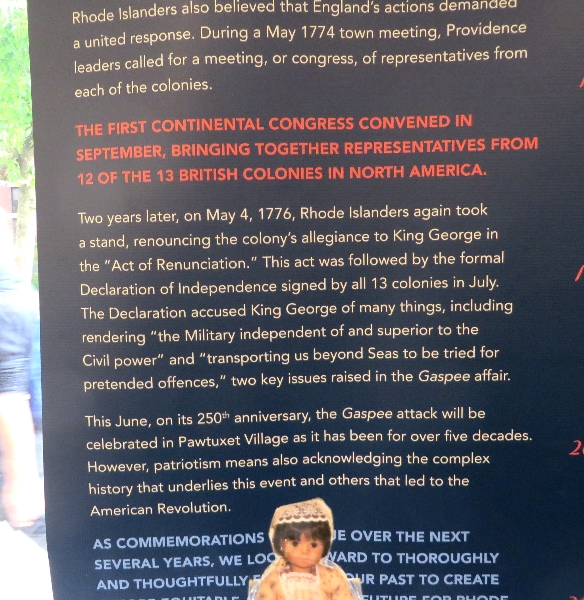
It's laundry day! We must was our linen. By linen I mean the clothing I wear next to my skin. My shift is made from linen. My persperation (that's a big word. Did I spell that correctly?) soaks into the linen. It cools me off on a sunny day. I change my body linen when I am hot and when I sleep. I must wash it in the river and dry it in the sun. 

I take a break to watch the babies and help them play with their toys. 

18 inch vinyl doll with dark hair looking at colonial children's toys lying on the grass

We have poppets, bilbocatch (cup and ball) and a hornbook to practice our reading.


18 inch vinyl doll with dark hair in a purple calico print dress standing on a brick walkway in front of eighteenth century children's toys lying on the grass


Next is market day. 

We grow many herbs in the kitchen garden. Some are used for medicine and others for cooking. This lady has extra herbs she sells in the marketplace.

18 inch vinyl doll with dark hair looking at jars of garden herbs


We do not drink tea in our household any longer. I tell the herb seller my friend Felicity has a recipe for raspberry leaf tea. When I feel poorly after indulging in too many biscuits, Mamma brews me a tisane of peppermint leaves. I love peppermint tea. Raspberry leaf tea tastes like grass. 

The ladies break for tea (leftover from before the boycott or maybe some of the fine herbs grown in the garden) and games. 

Tea biscuits and white porcelain tea set on wooden tea table
Shrewsbury Cakes
I tell the lady I have made those with my friend Felicity in Virginia.
She knows Felicity!

Hands of a woman in colonial era long sleeve dress playing a card game outside
This lady plays cribbage

Life goes on in the usual ways for now. Come and visit again soon. I am sure I will have more to tell you if this war continues. 

Editor's note: We had a conversation about Felicity and Pleasant Company (twice with both sets of reenactors) and how she inspired us to DO history. Everyone misses Felicity, even an older adult who was not a child in the Pleasant Co. era has original Felicity and Beforever Felicity. History nerds and librarians are the best! 


Wednesday, July 1, 2026

Rhode Island Independence Day

 Rhode Island Independence Day

May 4, 1776

It's May ye 4th Seventeen Hundred and Seventy-Six. Today the Colony of Rhode Island has renounced allegiance King George III.


He has been behaving like a tyrant. We have had enough! (We are not yet ready to declare ourselves independent but in the future, this day will be known as Rhode Island Independence Day).

Small vinyl doll with red ponytail and long floral print dress in front of a bronze plaque
Mini Felicity May 4, 1776 


The Rhode Island General Assembly passed the Act of Renunciation at the Old State House on Benefit Street in Providence. We have five colony houses actually, but Providence is where the General Assembly is at the moment.  

Small vinyl doll with red hair and long floral print dress in front of an artist drawing of a large Georgian brick building with tower
The Rhode Island State House in 1776 (an artist rendering)


Mini Felicity stands in for me as she visits the Colony House.  (ed. note: newly renovated Old State House) 

Small vinyl doll with red hair and long floral print dress outside a large Georgian brick building with tower
Mini Felicity outside the Old Colony House in Providence


'Twas built between [17]60-62 [ed. note: and later expanded twice in the 19th-c. ]. after a fire destroyed the first colony house. This style of building is classic Georgian architecture. It takes up the whole block between Town Street and the new part of Town Street now called Benefit Street. (It was widened for the benefit of all). 

Here is mini Felicity at the parade ground outside.

Small vinyl doll with red hair and long floral print dress outside a large Georgian brick building with tower
Mini Felicity stands on the Parade Ground

She heads inside to listen to a reading of the Act of Renunciation in the Council Chamber. 

Mini Felicity waits to hear the General Assembly read the Act of Renunciation 


The General Assembly have added in some new oaths stating we no longer have to swear loyalty to the King. They declare the General Assembly will continue to govern itself. All court proceedings will be performed in the name of the state, not the King!

Such news!
The Rhode Island General Assembly has declared ... 
independence?!


This floor holds the Chamber of Deputies. The Governor’s Council Chamber is upstairs. 

Mini Felicity heads up the stairs to look at this chamber.
Small vinyl doll with red hair and long floral print dress in front of a brick fireplace with white wooden mantle and old map above
Mini Felicity upstairs in the Old State House


Here is a map of Providence. The college edifice is way up on the hill on the top right of the map. 

Small vinyl doll with red hair and long floral print dress in front of a map of colonial Providence
Mini Felicity 

Antique map of Providence buildings and rivers
Map of colonial Providence


While Mamma visits with Mrs. John Brown, we learn the alarming intelligence from the newspaper! 


What does this mean? 

Hint: For women? Nothing. Come back very soon for a look at Rhode Island Independence Day from a girls' eye view!

Monday, June 29, 2026

The Providence Tea Party March 2, 1775

 The Providence Tea Party

 March 2, 1775


Providence

White porcelain tea set on a small wooden table
An English tea set imported to America


To support the tax on tea or not to support the tax on tea? That is the burning question of today, March 1, 1775. I walk over to Mrs. John Brown's residence on Power Street to see what is happening. Mr. John Brown is a wealthy merchant. He does not support the "insidious" tax the Crown has placed on tea. Other people have different ideas.

Women are organizing a tea boycott and a tomorrow they will march on Market Square and burn the tea! GASP! 

Man and woman in colonial style clothing
Citizens of Providence call for tea boycott


"No tax on tea!" I am prepared to cry out. "No taxation without representation!" 

Not so fast.

The men are debating the tax. 

Three men in colonial costume standing against a wooden rail
Lawyers discuss the tax


A lawyer says the tax is small and only affects wealthy merchants who can afford to pay it. Another argues that most British subjects, even in England, are taxed without representation. The tax is to pay for a war fought on American soil. 


Others argue we never asked for the war so why should we pay the tax?

Moving along to Mrs. Brown's parlor, a lady is drinking tea. My adult person asks her how SHE feels about the tax on tea. My guardian argues it is women who do the shopping and drink the tea. Men have other options. They can visit a coffee house. Men drink spirits and coffee. Tea is a social beverage for ladies. 

This lady owns a small shop and says the boycott will harm her business. She is not in favor of it. 

Woman in colonial costume with tea set sitting at wooden table with men in colonial costume standing around her
No taxation without representation?


I don't know what to think! Should I sign the boycott or not?

18 inch vinyl doll in colonial dress and cap looks at signatures made with a quill pen on a piece of paper
Boycott list


I must explore more about where tea comes from and how it is made.

Tea comes from the leaves of a plant. In China they pick and dry the leaves. Then they compress them into bricks like this one for shipping across the ocean. [Editor's note: Or not really... museums just like to buy them because visitors think they're cool].

18 inch vinyl doll in colonial dress and cap touches a brick of compressed tea leaves
This is tea?


In the end I decide I prefer chocolate! 

18 inch vinyl doll holding wooden stick in a glazed clay jug
Making drinking chocolate is hard work.
This is why Felicity has Rose.


Grown up things like taxes do not concern me. 

More to come... I expect this is not the last we will hear about the cruelty of the Crown!

Sunday, June 12, 2022

Flat Jane Austen in Rhode Island: In which she learns of rogues and rebels!

 Flat Jane Austen in Rhode Island :

In which she learns of rogues and rebels!
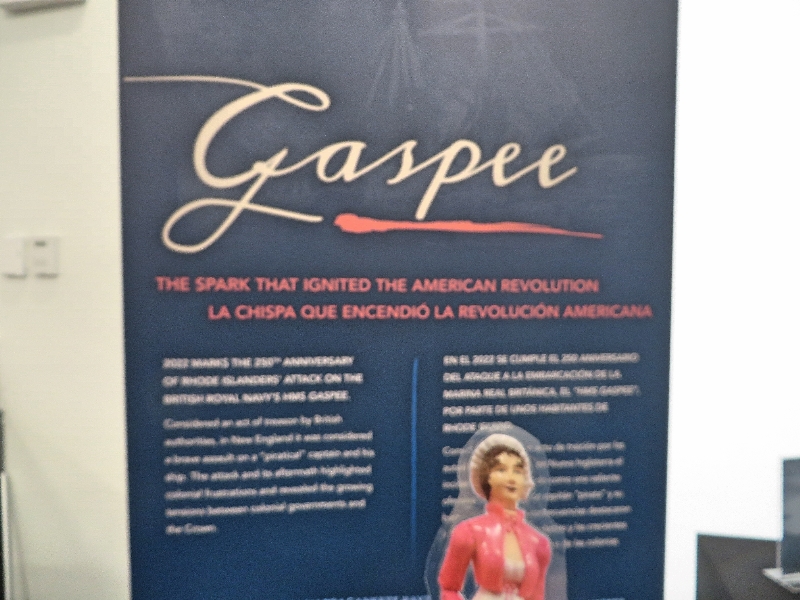
The Gaspee: The spark that ignited the American Revolution
                                                            
June 9, 18__

My dearest friends,

Do you recall the incident I mentioned when the rebels who refused to pay taxes burned one of our Royal Navy ships? Today the town historian endeavors to explain it to me. "Tis not so simple as a matter of 

After we defeated the French and Indians in the Seven Years War, Britain added a vast swath of new territory to the North American colonies and levied new taxes and enforced old ones on the Americans to pay off war debts. Remember that Rhode Island charter that gives Rhode Islanders the right to self-government? They seemed to think that gave them the right to avoid taxes! Many of the merchants were free-traders, smuggling rum and molasses into the colony! 
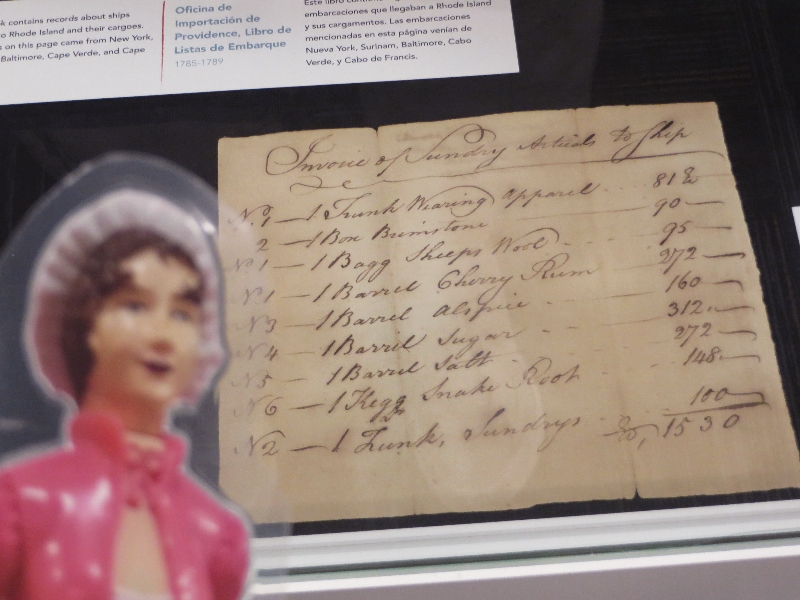
Shipping invoice 1780s


The King sent more royal navy ships and parliament passed more laws, angering the colonists. The Sugar Act and Stamp Act were repealed but Parliament then passed the Declaratory Act which claimed the right to legislate for the colonies. 
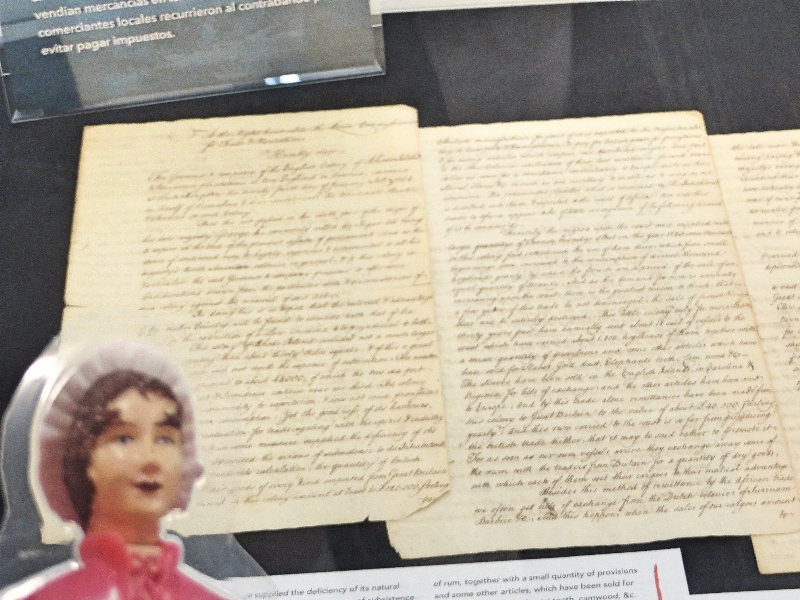
The colonists wrote to Britain to ask for the molasses act not to be renewed.


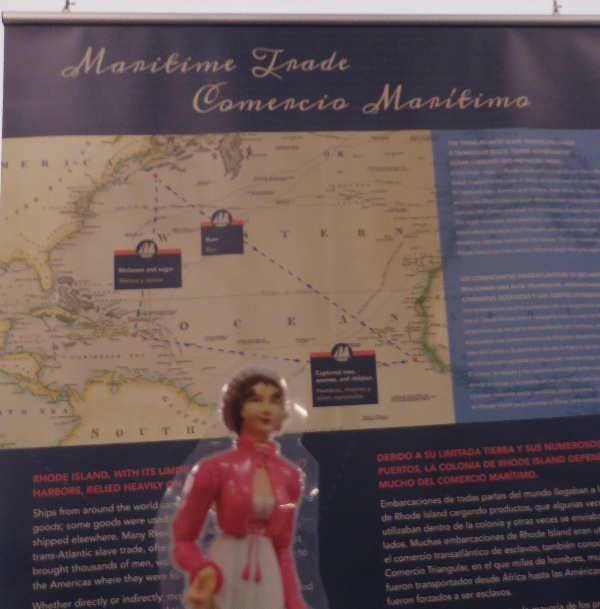
Rhode Island depended on trade with the West Indies and Africa to survive


All right I can see why that would infuriate those used to self-government, however, these rogues in Rhode Island misbehaved and therefore, their rights were taken away. 

By February of '72, the new Royal Navy inspectors were in place in Rhode Island waters. One Captain Dudingston seized a trading vessel known as the Fortune because her master, Rufus Greene, refused inspection. The ship, carrying 12 hogsheads of undeclared rum was towed to Newport and then to Boston. This sounds fair enough to me. Rhode Island's Governor Wanton was angry the ship had been taken to Boston, bypassing Rhode Island's Vice-Admiralty court, an act that violated Rhode Island's charter. So-which is the authority? Parliament or the Charter? Is one higher than the other? 
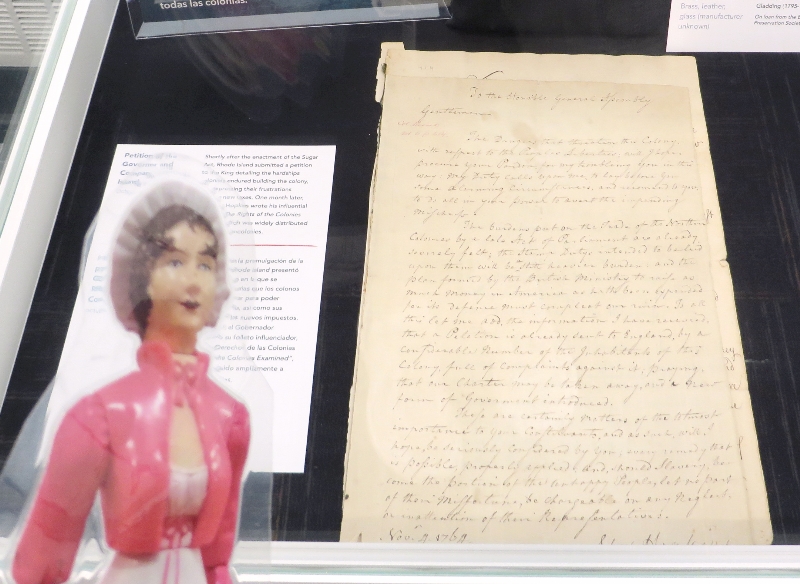
Who controls the colony?

The papers fanned the flames and Rhode Islanders talked of fitting out an armed vessel to resist customs seizures. Oh my!

Lieutenant William Dudingston of the schooner Gaspee proceeded to go after Rhode Island ships he suspected contained smuggled goods. 
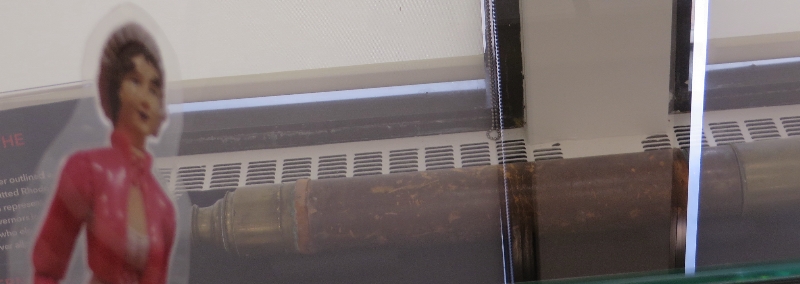
A British spyglass, of the type used by Lt. Dudingston to spy on 
Rhode Island ships.


The Rhode Island governor wrote to Lt. Dudingston to express his displeasure at the harassment of his colony's ships and questioned Lt. Dudingston's authority and actions. 
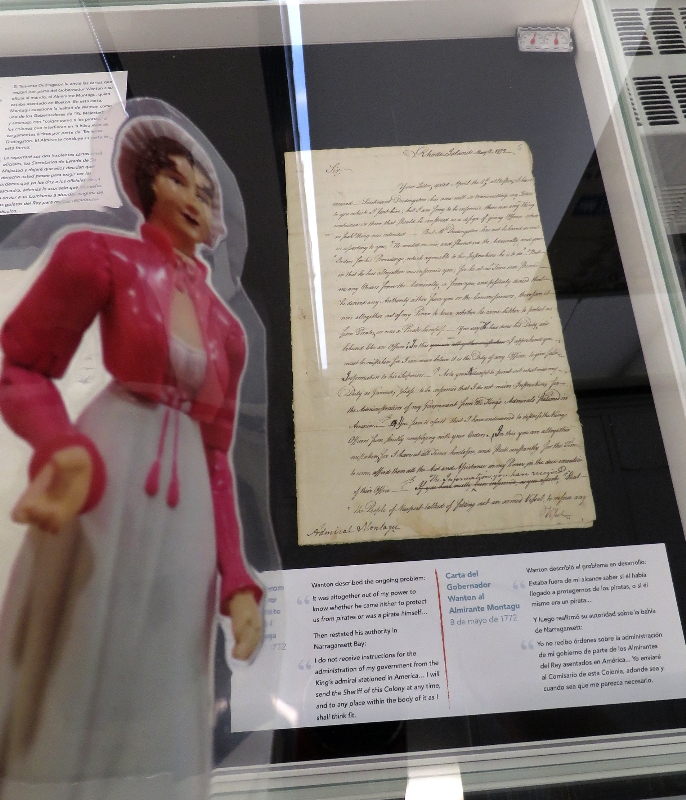
Gov. Joseph Wanton to Lt. Dudingston

Lt. Dudingston argued as Royal Naval Commander, he was not required to present papers to colonial authorities. A nasty letter writing campaign ensued. I am grateful my brothers were but babes. Do they have to deal with such problems now?

Dudingston argues back


I am half agony, half enjoying watching this drama play out in my mind. Is there a play, perhaps, one could see? 

Why yes, there is, at the YouTube Theatre, wherever that is. 

Lt. Dudingston referred matters to his superior in Boston, Admiral Montagu who threatened to hang as pirates anyone who interfered with the searches. See, I told you I heard there were pirates around!
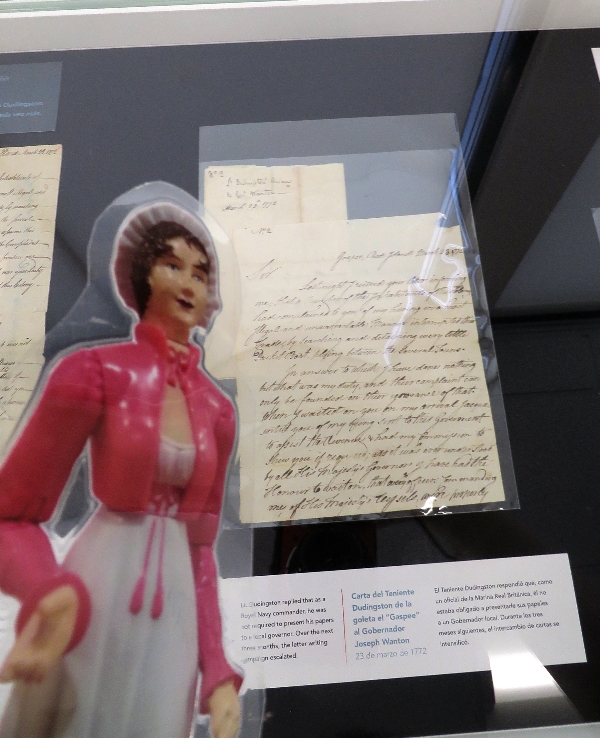
Dudingston says "You were rude! I'm telling! Don't send your sheriff after me!"


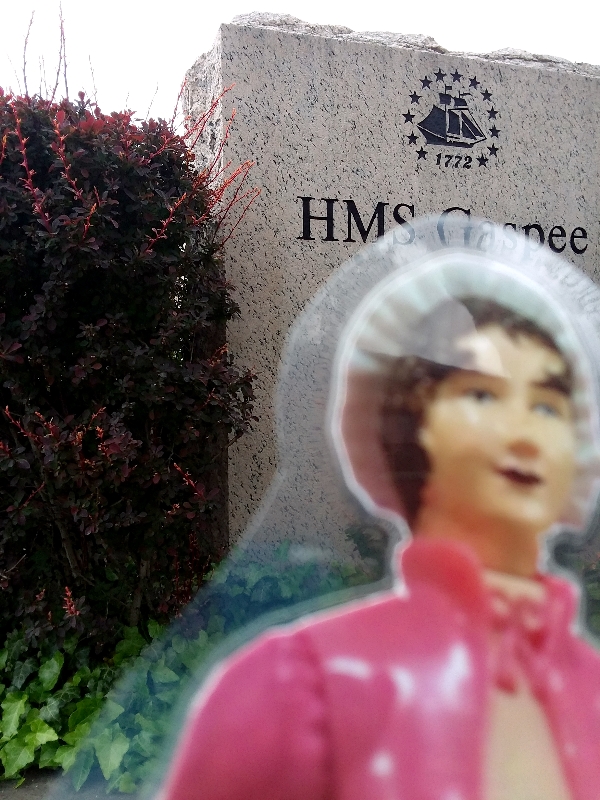
On the 9 June 1772 the packet sloop Hannah, owned by Mr. John Brown,  left Newport for Providence with the HMS Gaspee following. As Captain Lindsay of the Hannah knew the waters, he lured the Gaspee into the shallows and left her adrift on a sandbar, unable to move until the following day.

HMS Gaspee in miniature

Capt. Lindsay informed Mr. John Brown of the event. Mr. Brown sent a town crier inviting the men to Sabin's Tavern to discuss the incident and plan to destroy the good English ship. 
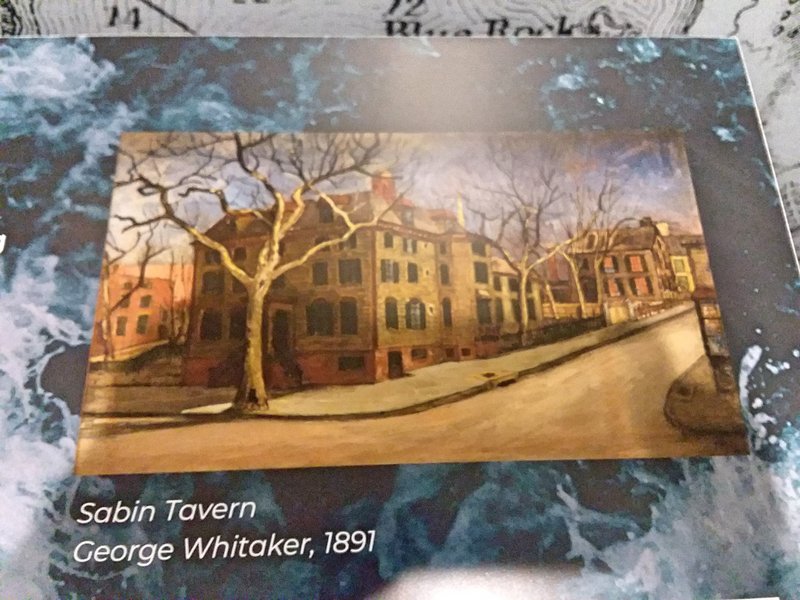
RI Historical Society image of Sabin's Tavern


Sabin's Tavern was once here at the corner of 
South Main and Planet Streets

One of the rogues, Abraham Whipple, led a small band of Rhode Island men who rowed eight longboats with muffled oars to the stranded ship. They wounded Lt. Dudingston and took him and his crew prisoner and removed to Pawtuxet Village.
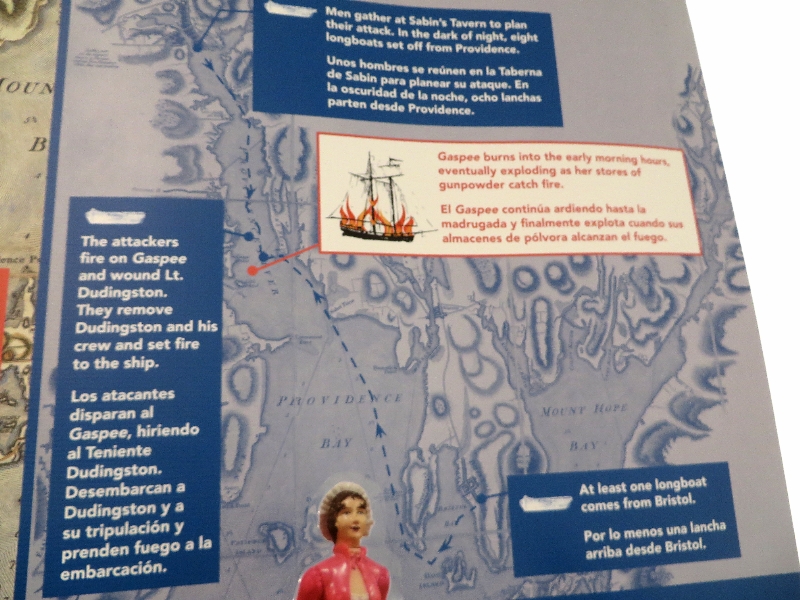
A useful map of Narragansett Bay


Next day, near daylight, the Rhode Islanders set fire to the Gaspee, burning her to the waterline whereupon her powder magazine exploded.
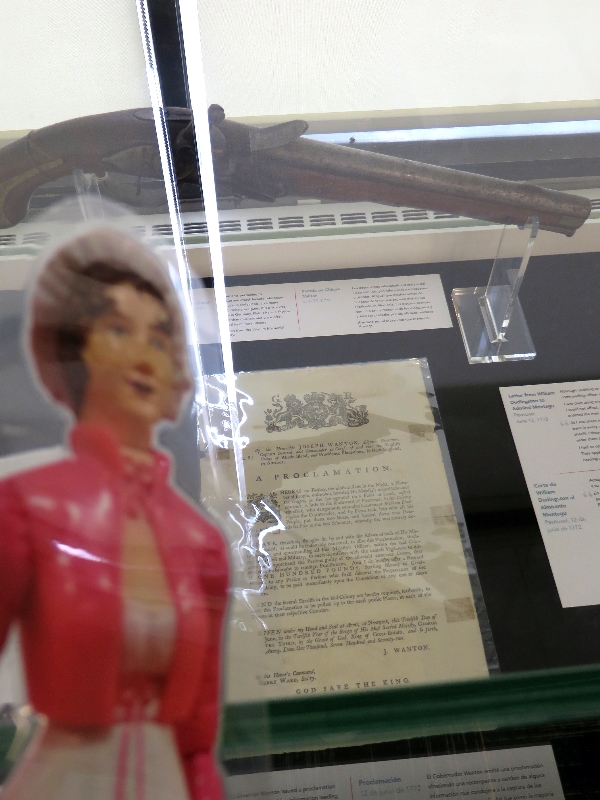


Gov. Wanton issued a proclamation offering 
a reward for information leading to the captue of the Gaspee raiders.

Testimonies revealed conflicting accounts. 
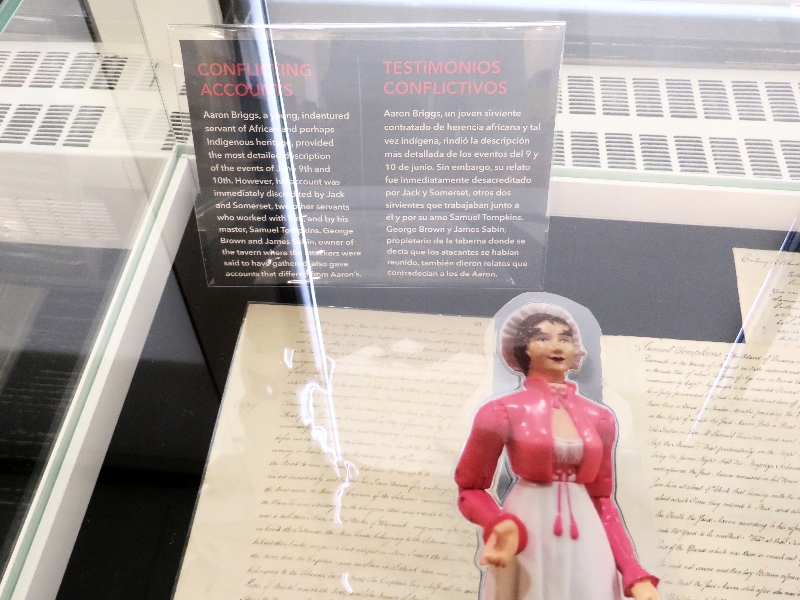
Conflicting accounts


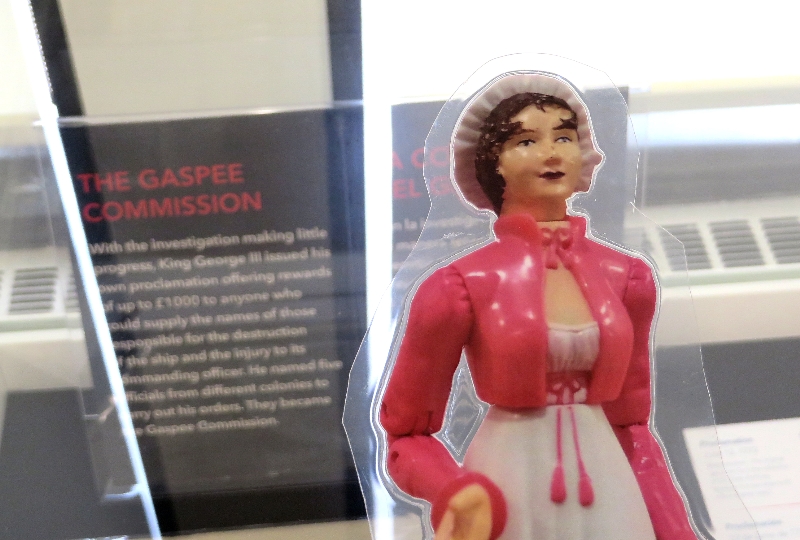
The Gaspee Commission


The King was most displeased and wished to punish those responsible. He even offered a thousand pound reward for each informant who could name "the persons concerned in that daring attack on our authority." The perpetrators would be sent to England to be tried. King George named five officials from other colonies to carry out his directive. This was known as the Gaspee Commission. 
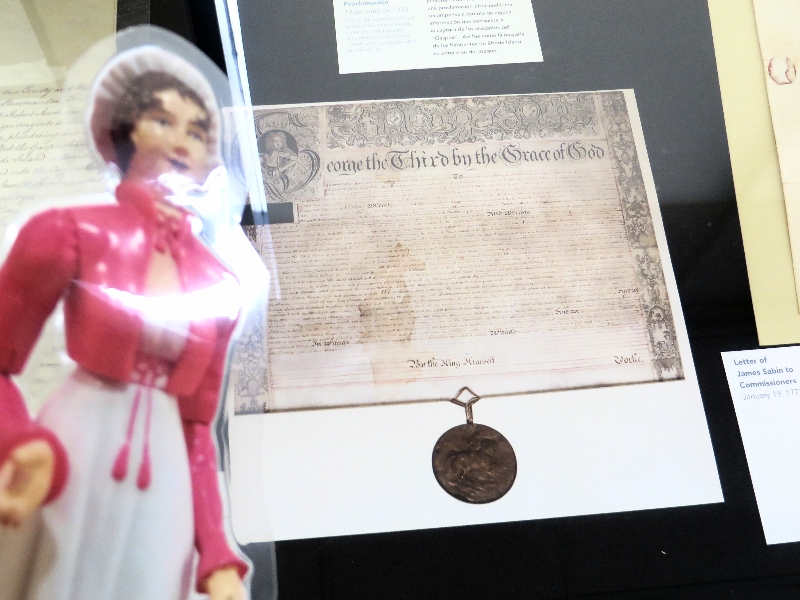

King George III's orders

.  

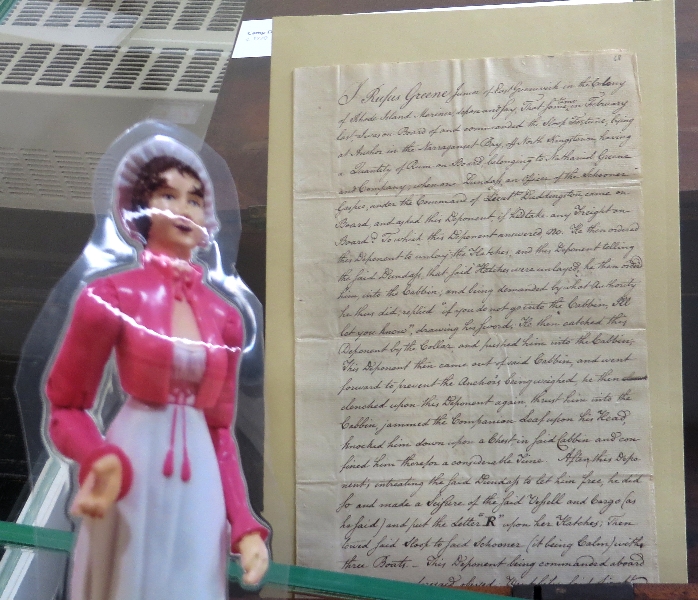
The deposition of one Rufus Greene, owner of the Fortune, seized by
 Lieutenant Dudingston in the spring of 1772, 


The Commissioners reported to King George that the evidence was contradictory matters and things contained in the deposition did not induce probable suspicion that said persons were guilty.
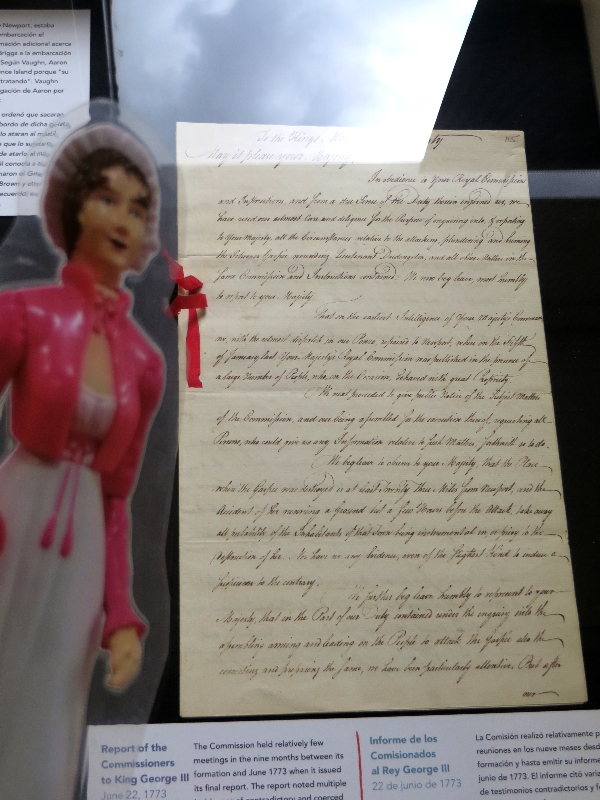

Report of the Commissioners to King George III
                                          

To date, no one has come forward to say for certain who was involved. Everyone seems to have some idea though. I suspect I have met some and their families.
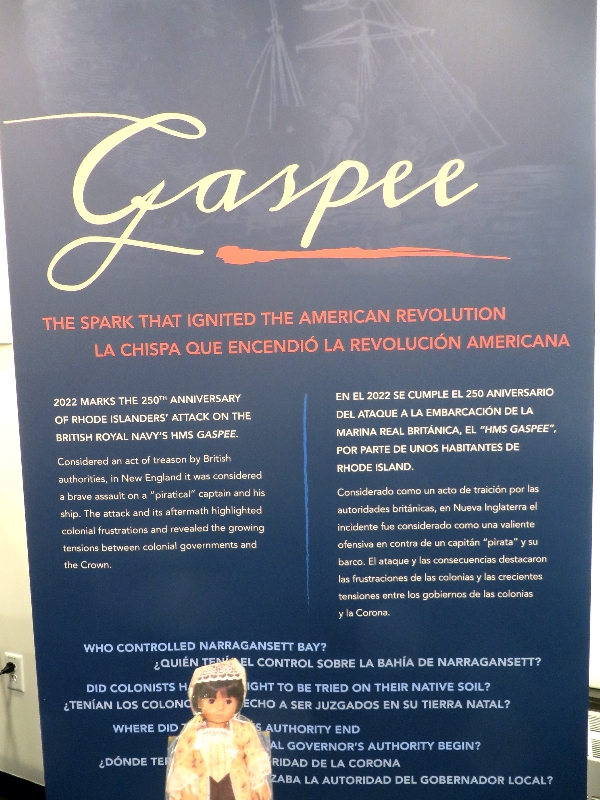
We didn't start the fire... or did we?

This was an act of treason, the first of many against the Crown. It led eventually to the war for American Independence, which we know we lost. 

Timeline to Independence


We were the first to declare independence on 4 May, 1776


No wonder poor King George went mad! It was treason! THEY see it as a great event, an opening shot fired at a tyrannical king; an act of resistance. The people risked their lives and freedom to fight laws they felt were unjust. Were they justified? Was it the same when King Charles I was beheaded or King James II deposed? Did we not fight Napoleon to defend our allies and our right to live as free Englishmen? I must think on this matter more. 

Yours most sincerely
Jane

Monday, March 9, 2020

Mini Felicity Visits the Old North Church

To review: It's spring 1775, the British have taken over Boston. They are coming for our guns! What
to do? The citizens of Massachusetts have a plan. This is where that Paul Revere fellow comes in.

Mini Felicity reviews the plan of action for rebellion against the Crown

The Sons of Liberty have come up with a plan. They will send messengers to warn the colonists the British are coming. They will send their two best riders William Dawes and Paul Revere to ride halfway to the town of Lexington. Their job is to warn Samuel Adams and John Hancock. In case they get caught, Paul Revere has come up with a backup plan. 30 extra riders will be placed across the river in Charlestown. Militia leaders should look to the steeple of the Old North Church, right above where I'm standing, every night for signal lanterns. The number of lanterns will tell the riders when the British army is leaving Boston and how. One lantern means the British will march over land and two means the British will come by sea. (a ha! So that's why he's important).

Mini Felicity studies a map of Boston
                       
See the map here? The British MAY march across Boston neck, that narrow strip of land that connects Boston to the mainland. That could take a long time. The British may choose to take a shortcut and tow across the Charles River into Cambridge saving time.

                           
The British are coming! “One if by land, two if by sea.”
 It's now the 18th of April, '75, almost Felicity's birthday.... No wait... Boston... The redcoats are coming! They're coming by sea! Paul Revere is ready to ride and sound the alarm!

He said to his friend, “If the British march
By land or sea from the town to-night,
Hang a lantern aloft in the belfry arch
Of the North Church tower as a signal light, —
One, if by land, and two, if by sea;
And I on the opposite shore will be,
Ready to ride and spread the alarm
Through every Middlesex village and farm,
For the country folk to be up and to arm.”

Mini Felicity sees the famous window

Paul Revere has asked two men to come to the church last night, 18th April. One is the caretaker, Robert Newman. The other man is a friend of Mr. Revere's, Captain John Pulling, Jr. The two men came into the church's front door, locked it, climbed a staircase in the back corner. Once in the upper gallery, they squeezed behind the pipe organ. Then they went through a small door in the tower. The men climbed the winding stairs and went up a ladder 8 stories. It was pitch black. At the top they used flint and steel to light two lanterns.

Mini Felicity in front of the famous window

This is the window of the bell tower. Mr. Newman and Capt. Pulling lit the two lanterns and held them out the window facing towards Charlestown for sixty seconds. That was all the time that was needed. I can fit up there no problem! They should have asked a kid.

Plaque commemorating the signal lanterns 

Then he climbed the tower of the Old North Church,
By the wooden stairs, with stealthy tread,
To the belfry-chamber overhead,
And startled the pigeons from their perch
On the sombre rafters, that round him made
Masses and moving shapes of shade, —
By the trembling ladder, steep and tall,
To the highest window in the wall,
Where he paused to listen and look down
A moment on the roofs of the town,
And the moonlight flowing over all.

A plaque memorializing Robert Newman
                                              But mostly he watched with eager search
The belfry-tower of the Old North Church,
As it rose above the graves on the hill, 
Lonely and spectral and sombre and still. 
And lo! as he looks, on the belfry’s height 
A glimmer, and then a gleam of light! 
He springs to the saddle, the bridle he turns, 
But lingers and gazes, till full on his sight 
A second lamp in the belfry burns!


Behind mini Felicity is the steeple with belfry immortalized in Longfellow's poem
The riders rode off to warn the surrounding countryside the British were marching to steal their ammunition. An hour later, Paul Revere arrived in Charlestown. He borrowed a horse and began his own ride.

Following along with Paul Revere

Mini Felicity admires a drawing of the Old North Church

Even though Paul Revere was captured by the British, other men rode on. The message reached as far north as New Hampshire and south to Connecticut. The next day, when the British arrived in Concord, they found an armed and waiting militia. Oh dear, I fear what may happen next.

You know the rest. In the books you have read,
How the British Regulars fired and fled, —
How the farmers gave them ball for ball,
From behind each fence and farm-yard wall,
Chasing the red-coats down the lane,
Then crossing the fields to emerge again
Under the trees at the turn of the road,
And only pausing to fire and load.

Mini Felicity learns about the men who died in the Revolutionary War
Susanna tells me that in the future, the country will be divided over the issue of slavery. A poet by the name of Henry Wadsworth Longfellow, a Bostonian, wrote a poem to create a national hero. Paul Revere was an example of the country's noble past.

Henry Wardsworth Longfellow

That poem Susanna knows is so popular people all around the country worked to have the steeple restored. We did not have time to go up.

Mini Felicity learns about the preservation of the church steeple

Here is the pew of Rev. Mather Byles

Mini Felicity learns about the Loyalist preacher Rev. Mather Byles

Rev. Byles is a preacher, poet and Loyalist! (and some sort of cousin to Susanna's guardian). He was the second rector here at the Old North Church (1768-1776). The parishioners are about to fire him on April 18, 1776. They did not like the fact he was a Loyalist. To be fair, the parishioners stopped paying him because he was a Loyalist and partly because they ran out of money after the port was closed. He considered moving to Portsmouth, New Hampshire. Later he will move to Canada.

Outside the church they have a beautiful Georgian garden. I look for signs of spring.

Mini Felicity spies signs of spring

Spring is springing. I see crocuses trying to pop up.
Mini Felicity in the Georgian garden behind the Old North Church

 I must return to my owner now and tell her what I learned. I am sure she will be back in Boston soon to tell you more about Paul Revere.